Why bearskin grass is so popular as a ground cover
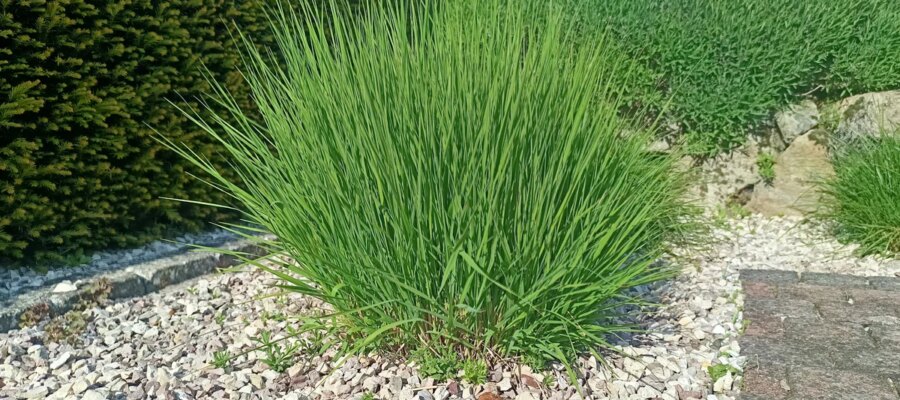
There are plants that adapt perfectly to our times: simple, modern and at the same time a real attraction. Bearskin grass is just one of them. With its dense, hemispherical tufts, it looks like little cushions that instantly give structure to flower beds, rockeries or front gardens.
- Easy to maintain: Almost no watering, no complicated pruning
- Robust: hardy and drought resistant
- Attractive all year round: wintergreen, so decorative even in winter
- Versatile: Can be used in flower beds, rockeries, front gardens or pots
Whether you’re designing a natural garden or want to create a minimalist yard, bearskin grass is a plant that works in both worlds.
Bearskin grass in portrait: appearance, types and properties of wintergreen
Bearskin grass belongs to the genus Fescue and grows as an ornamental grass that forms cushions. Depending on the variety it reaches a height of around 10-20 cm and remains beautiful and compact. The narrow, needle-like leaves form dense clumps that immediately add structure and calm to beds.
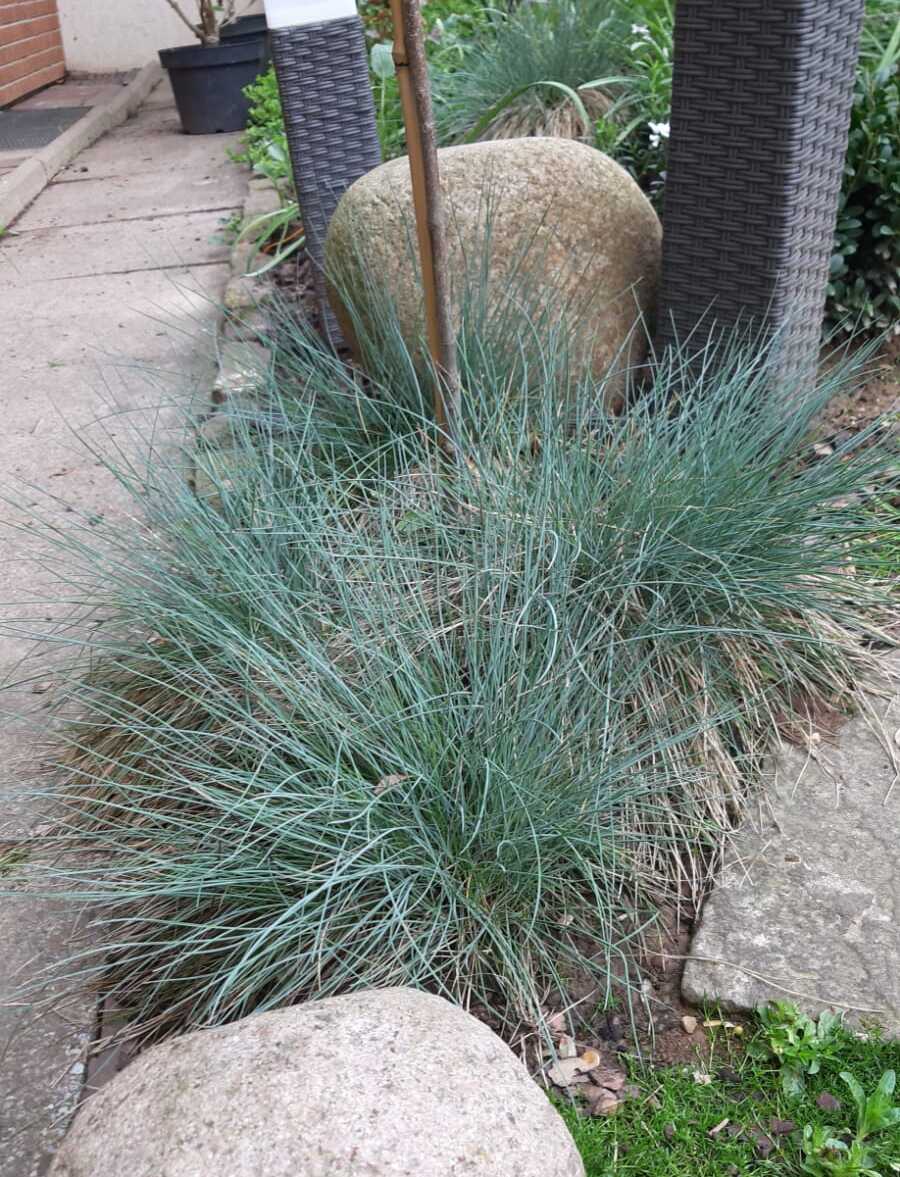
A big plus: bearskin grass is winter green dThe stems remain decorative even in the cold season. Especially the green one (Festuca gautieri) looks fresh almost everywhere. With the blue relative (Festuca glauca), the color depends somewhat on the climate: in mild winters the foliage remains a beautiful blue, in very cold winters it may temporarily turn brownish, but it reliably sprouts again in spring.
Green or blue bearskin grass? The differences
Both species are often referred to by this name Bearskin grass offered, if only botanically Festuca gautieri which is the “real” bearskin grass. Festuca glauca will be correct as Blue fescue designated. Both are closely related, but differ significantly in color, origin, and location requirements.
|
characteristic |
Festuca gautieri (Bearskin grass) |
Festuca glauca (blue fescue) |
|---|---|---|
|
Color |
Rich, strong green |
From silvery blue to steel blue |
|
Growth habit |
Soft and hemispherical cushions |
Growth slightly firm and erect |
|
Origin |
Pyrenees, quite cool places |
Southern and central Europe, arid and stony places |
|
Boden |
Humus from sandy, moderately dry |
Thin, sandy, very permeable |
|
Effect |
Natural, harmonious |
Modern, beautiful, architectural |
|
Winter hardiness |
Very robust, even when wet |
Very robust, more sensitive to water stagnation |
|
Typical use |
Rock garden, bed, embankment |
Gravel bed, modern front garden, planter |
Conclusion:
- Festuca gautieri (green) is ideal for soft, natural plant images.
-
Festuca glauca (blue) creates fresh, modern accents in clearly structured gardens.
Both are easy to care for, resistant and durable, the choice depends above all on the style of your garden.
Location and Soil: Where does bearskin grass grow best?
For bearskin grass to stay healthy and form its dense cushions, location and soil are crucial:
- Light: Sunny places are ideal: it grows more freely in partial shade
- Boden: permeable, sandy to stony, not too rich in nutrients
- Waterfall: no waterlogging: it’s better to be a little drier than too wet
- PH value: neutral to slightly acidic, tolerant to limestone
Suggestion: In heavy clay soil, you can simply work in a little sand or gravel to prevent the roots from becoming waterlogged.
Caring for bearskin grass: watering, fertilizing and cutting
Many hobby gardeners look for plants that stay beautiful without much effort. This is exactly where bearskin grass scores:
- Deposit: Only in the first weeks after sowing and during prolonged drought
- Fertilize: Economical, too many nutrients cause the pillows to fall off
- Cut: No pruning necessary; In spring, carefully comb the old stems
- Winter protection: Not necessary, both species are completely resistant
Result: With bearskin grass you have an ornamental grass that looks beautiful almost by itself and will bring joy for many years.
Garden design with bearskin grass: ideas for the front garden, rockery and pots
In the courtyard
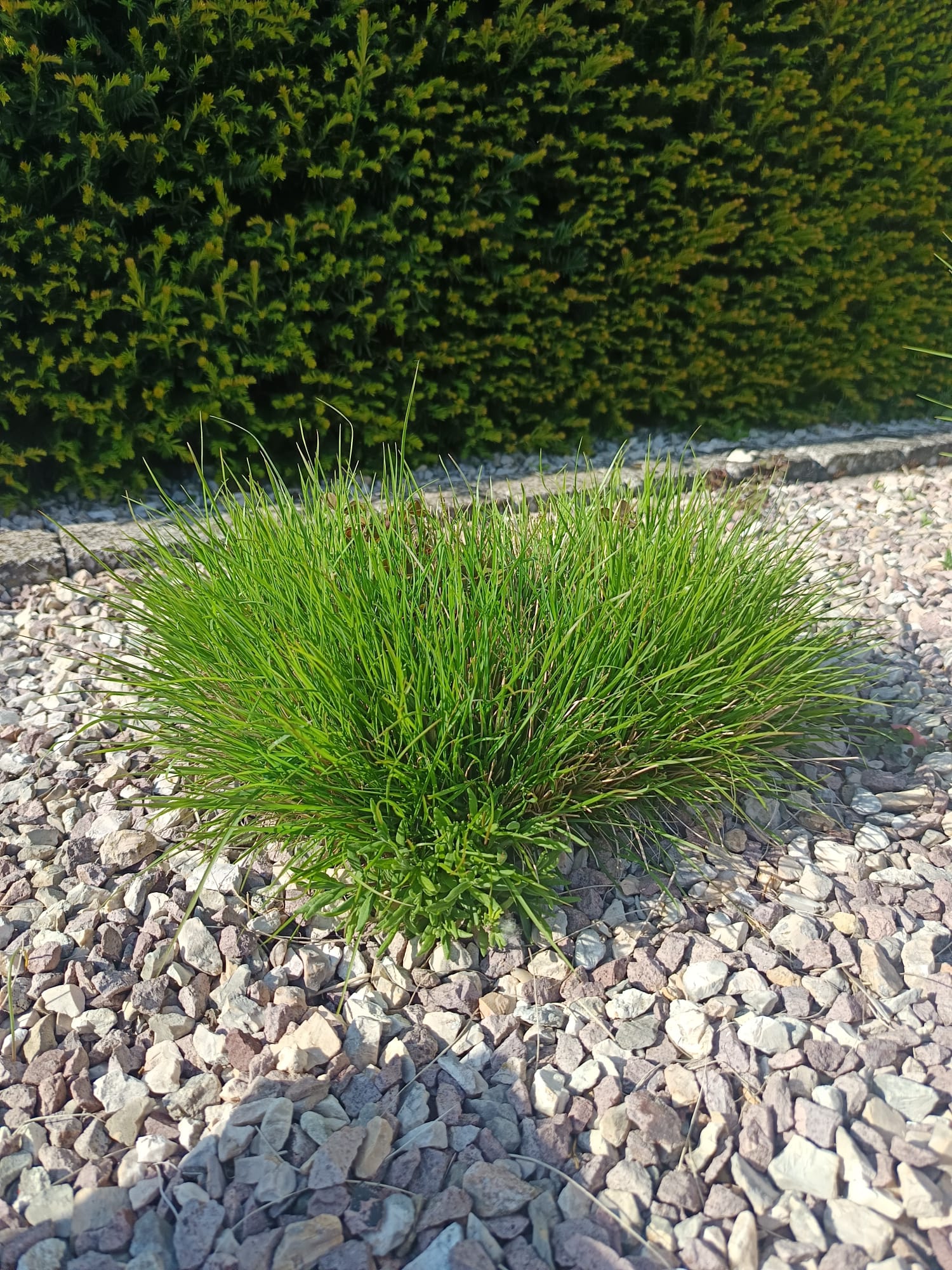
Combine bearskin grass with gravel or natural stone slabs. Multiple clusters next to each other create a clean, modern look that requires little maintenance.
As a bed border
The semi-circular cushions form a natural frame along paths or flowerbeds, making bearskin grass ideal as a low, lively bed border.
In the rock garden
Bearskin grass feels at home among stones, sedums, houseleek and lavender. The blue version creates exciting color contrasts.
In the bucket
The bearskin grass also convinces in pots on the terrace or balcony: easy to care for, compact and can be combined with perennials such as sage or small-flowered roses.
Combination ideas with flowering plants
The slender stems of bearskin grass provide a beautiful counterpoint to the lush flowers. It looks particularly harmonious:
Bearskin grass throughout the year: care calendar
- Spring: Comb out old stems and divide pads if necessary
- Summer: Only water in extreme heat, otherwise leave it to its own devices
- Grass: It does not require special care, it remains decorative
- Winter: Wintergreen and dimensionally stable, it resprouts reliably in spring
Bearskin Weed Frequently Asked Questions (FAQ)
Is bearskin grass really hardy?
Yes, both types are robust and can withstand frost and snow without any problems.
Can I also plant it in the shade?
In the shade it becomes looser and less dense; sunny positions are ideal.
How often should I share it?
After a few years, sharing can help maintain vitality.
Is bearskin grass susceptible to pests or diseases?
No, it is considered extremely robust and easy to maintain.
Conclusion
Whether green or blue, bearskin grass (Festuca gautieri) and blue fescue (Festuca glauca) are two easy-care ornamental grasses that add structure, color and calm to your modern garden. They are durable, compact and versatile, making them perfect for modern front gardens, rock gardens or natural plantings.
Click here for the two ground cover plants!
If you are interested in grass in the garden, be sure to check out our detailed blog post on grass in garden design!
latest posts published
The best alternatives to cherry laurel and thuja: hedge plants for finches
Heat in the Garden – How to Protect Your Plants from Drought Stress – finch
Evergreen plants in the garden: structure and color
Which one suits your garden? — Tree Finch

Redefine your bedroom with Bernhardt luxury beds
Use climbing roses as privacy screens and green facades in the garden – chaffinch

Best Home Remedies for Your Garden: Chaffinch

Caracole – Elegance, refinement and inspiring design
This is how olives, roses, etc. they survive the finch