If when it comes to flowering shrubs you always think only of forsythia, hydrangea or lilac, perhaps you are missing out on a real treasure: Beautiful Kolkwitziabetter known as Perlmuttstrauchit is one of those plants that are planted too rarely but are always admired.
With them lush, pink bell-shaped flowersits delicate growth and simple nature the perfect choice for those looking for something special in the garden, without burdening you with a lot of maintenance efforts.
1. What is pearl bush?
The botanical name Kolkwitzia amabilis means something like "the lovely" – and that’s pretty accurate. The mother-of-pearl bush originally comes from China and is still a real insider’s gem in European gardens today. Although it was widespread in the 1950s and 1970s, it was later replaced by other fashionable plants. Completely wrong, because anyone who has ever seen a Kolkwitzia in full bloom simply must appreciate it.
Botanical:
- Family: Caprifoliaceae (Geißblattgewächse)
- Origin: Western China
- Growth: upright to arched, with fine branches and abundant flowers
2. Flowers, foliage and seasonal effects of the mother of pearl bush
The mother-of-pearl bush does not boast long-lasting color, but rather a brief, intense sheen that is hard to miss in May or June:
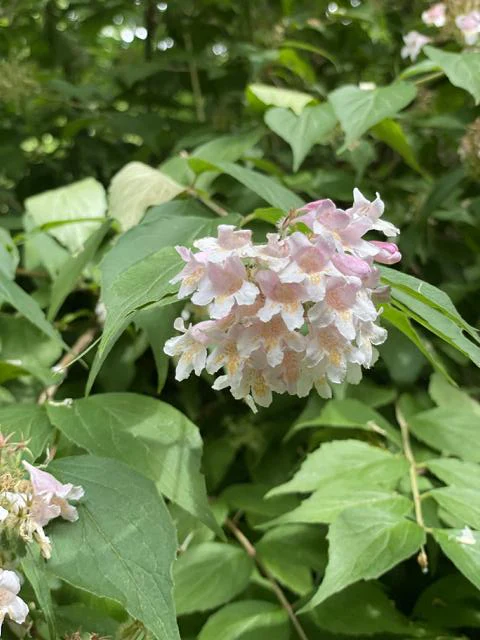
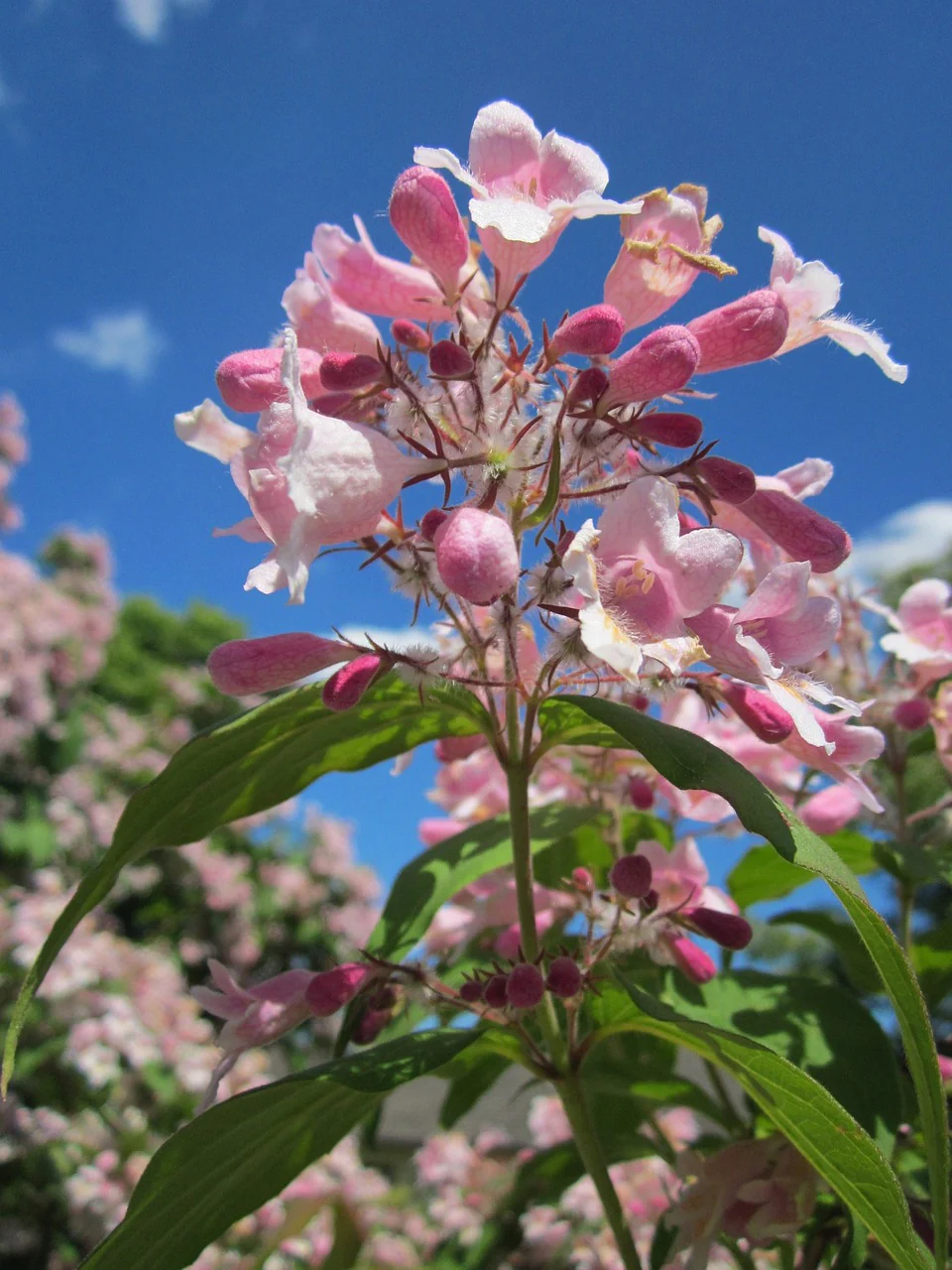
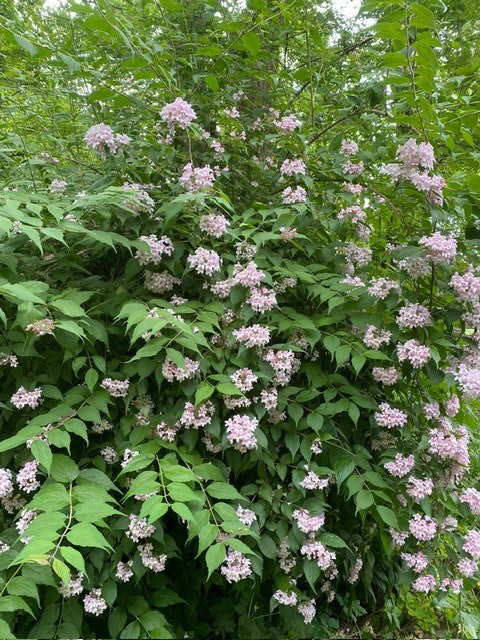
- Flower: delicate, bell-shaped, pink flowers with yellow throats, close together on the shoots
- Labs: fresh green, rather simple, elliptical shape – nice background for flowers
- Growth: loose, upright, elegantly hanging with age, very natural and light
Suggestion: The flower looks particularly beautiful if you plant it against a darker background, for example in front of yews, fences or in combination with structural plants.
3. Growth habit and size of pearl bush
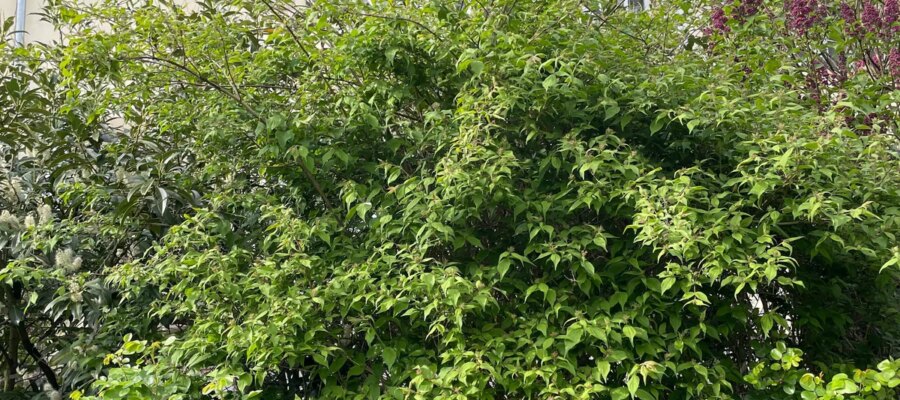
- Growth height: That. 2.0-3.0m
- Length: approximately 2.5-3.0 m
- Growth: initially compact, then elegantly expanded with slightly overlying shoots
- Growth behavior: grows moderately, takes 2-3 years to reach full flowering potential
4. Location and soil: what does the mother of pearl bush need?
The mother of pearl bush is surprisingly adaptable. Exception: it should not be too shaded, otherwise the flowers will be weaker:
- Light: sunny to partially shaded (full sun = more flowers!)
- Boden: humus, permeable, preferably slightly calcareous
- Humidity: moderately humid, without waterlogging. Copes with drought well.
- Frost resistance: absolutely winter-proof
Suggestion: Kolkwitzia is one ideal plant for the most difficult terrainas long as it doesn’t have to be too wet and, once rooted, it tolerates even the driest places well.
5. Care and cutting: Just sit
Once established, the pearl bush is extremely easy to care for:
- No regular pruning is necessary, just occasional thinning is best immediately after flowering
- It flowers on perennial shoots: radical pruning = loss of flowers the following year
- As it ages it takes on a picturesque, wide, arching shape, so please don’t cut it too strictly into shape!
- See: Compared to other flowering shrubs, Kolwitzia really needs little care and falls into this category “Uncut shrubs” (because practically no shrub can survive for several years without pruning if it wants to bloom beautifully…)
6. Ecological value? There is!
Although the mother-of-pearl bush is not a native wild tree, it provides food for insects:
- Die they are trumpet-shaped flowers Bumblebees, wild bees and hoverflies visited, especially during the flowery break at the beginning of summer among lilacs and hydrangeas
- No invasive trees, no uncontrolled spread
7. Use in the garden: Where does the pearl bush make an impression?
1. As a solitaire in the garden or yard
A free-growing pearl bush looks best when it has enough space, for example as a space-forming tree at the edge of the lawn, in a corner of the garden or as a quiet conclusion to a bed area. The loosely structured shrub gives the plantings lightness and does not appear too massive.
Design tip: Plant it slightly raised or accompany it with lower perennials, so the growth above appears even more elegant.
2. In hedges of mixed flowers
It is ideal as part of one natural hedge full of flowers – for example. B. with fragrant jasmine, rose deutzia, weigela, spar or Copper rock pear This way you prolong the flowering season and ensure harmonious color transitions.
3. In cottage gardens
With its slightly overloaded floral dress, the mother-of-pearl bush is reminiscent of old cottage gardens, only they require less maintenance. Simply top it with delphiniums, peonies, catnip or lady’s mantle for a romantic image.
8. Combine Kolkwitzia: These plants do particularly well
- flowering bushes: Weigelie (e.g. 'Bristol Ruby' or 'Styriaca'), Deutzie (’Scabra Plena', 'Magnificent', 'Pink'), Spiere (’Vanhouttei', 'Arguta') or Rosen
- Perennial plants: Sage, Fraenmantel, ornamental garlic
- Structural herbs and plants: feather bristle grass, bearskin grass, miscanthus 'Gracillimus', bamboo (Fargesia, e.g.: Bamboo Jumbo)
- Ground cover: Fairy Flower, Little Periwinkle, Golden Strawberry
Conclusion: the mother-of-pearl bush – for everyone who loves flowers and loves surprises
The mother-of-pearl bush is not a star of the show, but it is real discovery for everyone who wants to decorate their garden with one tree with rare flowering and easy maintenance wants to get rich. It is robust, stable and surprises year after year with its beautiful pink flowers. It looks especially good when it is given enough space to develop its full potential. Still have questions? Feel free to contact us!
Click here for the mother of pearl bush!
Happy gardening!
latest posts published
The best alternatives to cherry laurel and thuja: hedge plants for finches
Heat in the Garden – How to Protect Your Plants from Drought Stress – finch
Evergreen plants in the garden: structure and color
Which one suits your garden? — Tree Finch

Redefine your bedroom with Bernhardt luxury beds
Use climbing roses as privacy screens and green facades in the garden – chaffinch

Best Home Remedies for Your Garden: Chaffinch

Caracole – Elegance, refinement and inspiring design
This is how olives, roses, etc. they survive the finch