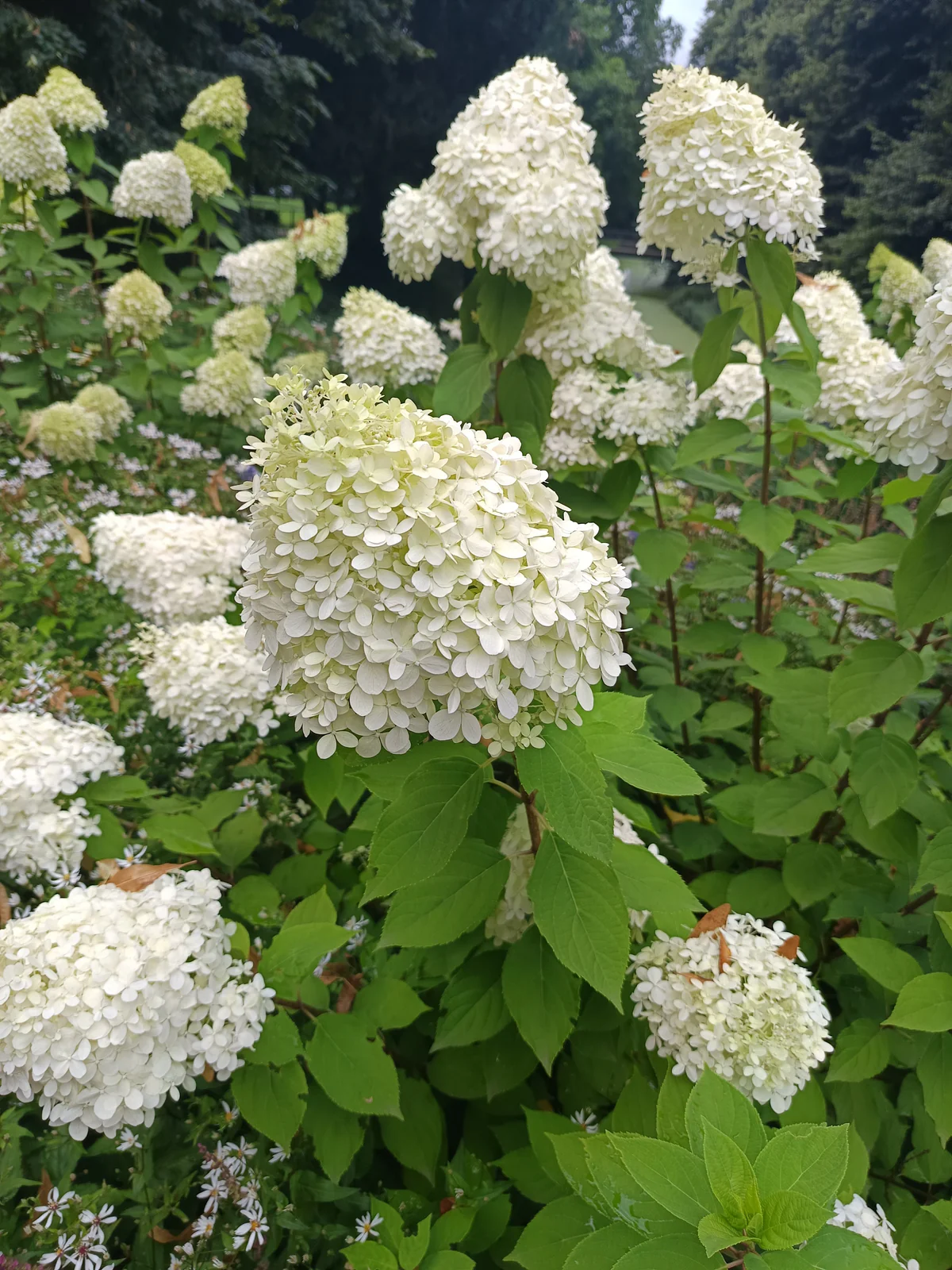
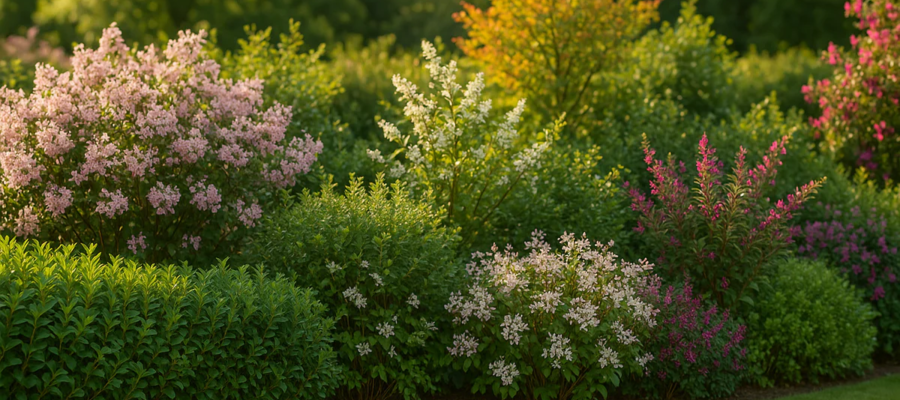
The rows of thuia and the endless hedges of cherry laurel often appear monotonous and are not particularly valuable from an ecological point of view. A mixed hedge On the other hand, it brings variety to the garden: it flowers at different times of the year, provides fruit for birds and often shows colorful color in autumn. At the same time, it provides privacy, structure and a lively appearance of the garden.
Whether romantic with delicate flowers, natural with native shrubs or clear and modern with simple shapes, a mixed hedge can be designed very individually and the choice is quite large. So how do you find the right shrubs for a hedge?
In this article we will show you the best shrubs, practical combination ideas for different garden styles and tips on how to correctly approach planting and care. Here’s how to find the hedge that suits your garden perfectly.
Shrubs suitable for mixed hedges
It’s all in the mix: wild shrubs provide ecological value, ornamental shrubs provide flowers and color, and evergreen or structural trees provide order and opacity.
Wild shrubs: robust and ecologically valuable
-
Hazelnut (Corylus avellana): Fast and robust growth. In autumn it provides nuts for humans and animals. With a width of up to four meters it is particularly suitable for larger natural hedges. Also available as a root product.
-
Schlehe (Prunus spinosa): Early flowering with white flowers in spring, then dark blue fruits. It forms many root runners, so is best in rural gardens with space or with a root barrier. Also available as a root product.
-
Dog rose (Rosa canina): Simple, romantic and full of thorns, ideal for natural hedges. Their rose hips are valuable to birds. At between two and three meters wide, it is not suitable for small front gardens. Rosehip is also available as a root product.
-
Black elderberry (Sambucus nigra): Versatile, flowers for syrup, berries for jam. It grows large and wide (up to four metres), making it particularly suitable for large properties. You can also find the root product here.
Ornamental shrubs: decorative and colourful
-
Kolkwitzie/Perlmuttstrauch(Kolkwitzia amabilis): Full of pink flowers in early summer. Slightly protruding shrub, up to about two meters wide, with a romantic accent, also for front gardens.
-
Rosen-Deutzie (Deutzia hybrida 'Mont Rosa'): Compact shrub (1.5–2 m wide) with showy pink spike flowers. Easy to maintain and tolerant of pruning, ideal for front garden hedges and flowering combinations.
-
Copper rock pear (Amelanchier lamarckii): Spring: white flowers, summer: edible fruits, autumn: intense colour. With a width of around two meters it is also suitable for smaller gardens if cut regularly.
-
Schneeball (Viburnum opulus): Remarkable balls of white flowers and red fruits in autumn. It grows up to three meters wide, making it ideal for medium to large gardens. Also available as a root product. Also available as a root product.
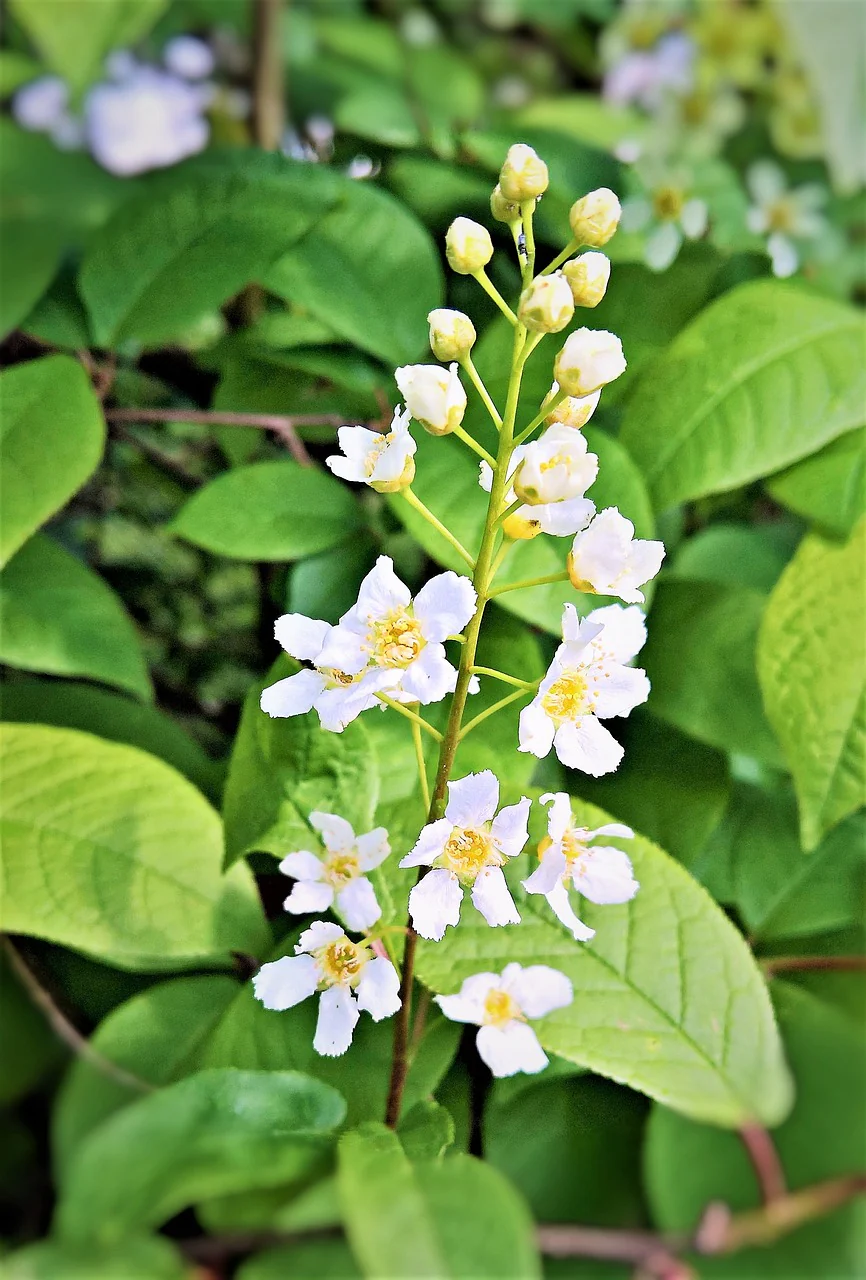
(Rosen Deutzie)
Structure provider – effective all year round
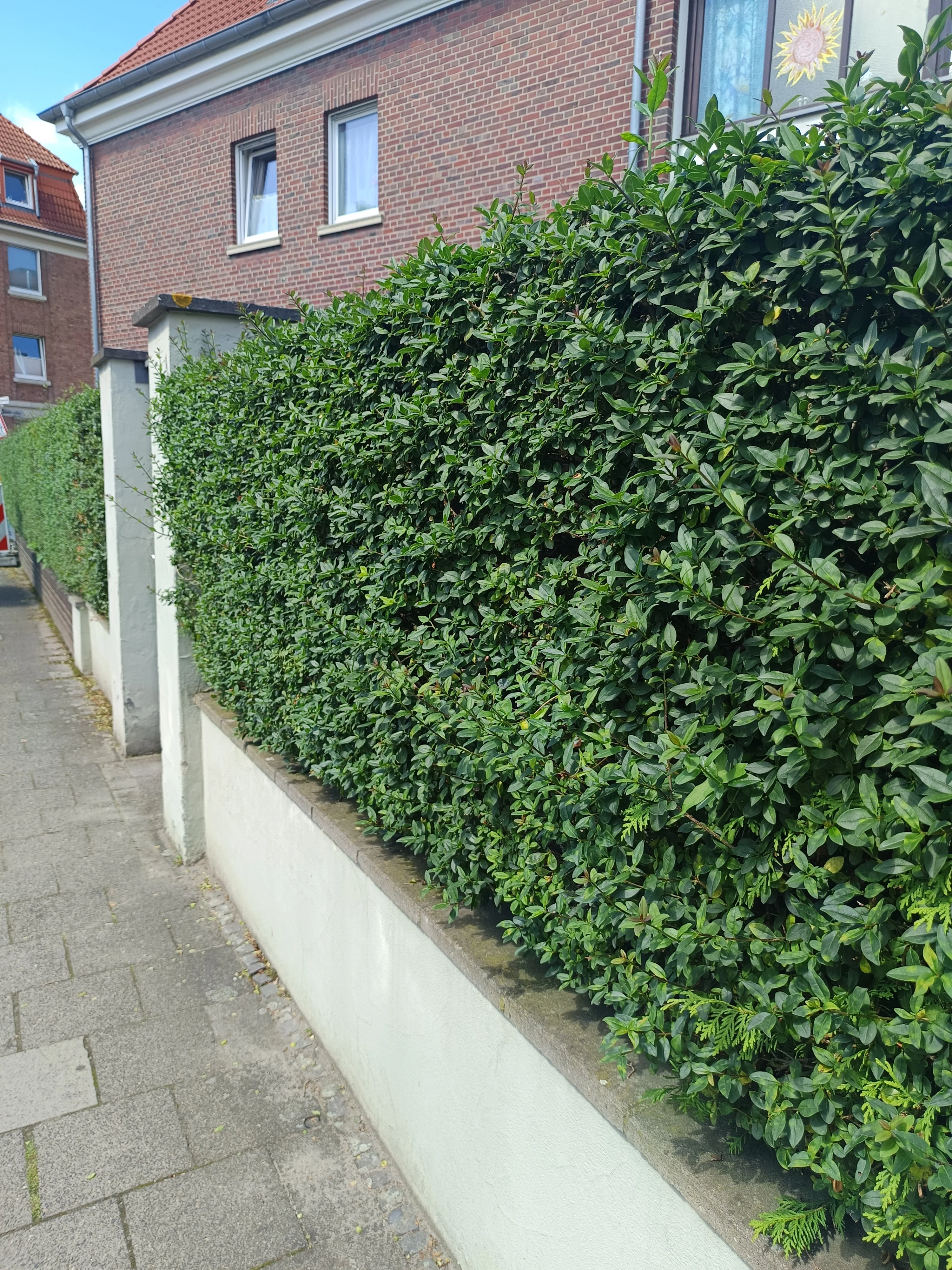
(Privet-Hecke)
Ideas for successful combinations
A mixed hedge thrives with the right composition. Depending on the style of your garden and desired use, you can combine different shrubs to create a hedge that suits you perfectly.
The flowering hedge
If you want to make your garden colorful and lively for many months, a flowering hedge is the right choice. A combination of Kolkwitz, Rosa Deutzie AND Rock pear guarantees diversified flowering times. While the Kolkwitzia impresses with pink flowers in early summer, the Rose Deutzia produces strong flower panicles and the wild pear also impresses with its fruit and autumn colours.
It adapts particularly well to romantic and classic gardens. Space required: approximately two meters wide.
Here you can go directly to Kolwitzie, Rose Deutzie and Copper Rock Pear.
The hedge for the protection of birds
If you want to provide food and nesting places for birds in the garden, choose native shrubs such as Dog rose, Black elderberry AND hazelnut. The dog rose brings rose hips for the winter, the elder gives flowers and berries, the hazel gives precious fruits.
Best suited for larger natural gardens as these shrubs grow quite wide and need space.
Here you will find dog rose, black elderberry and hazelnut.
The hedge for all seasons
For a varied image all year round, you can use shrubs such as Rock pear, Snowball AND Privets combine. Blueberry flowers early and brings autumn colours, viburnum provides balls of white flowers and red berries in summer, and privet keeps the hedge attractive even in winter thanks to its wintergreen character.
Ideal for family gardens or modern gardens: decorative, easy to care for and keeps in shape with little pruning.
Here you can find the wild copper pear, the common viburnum and the privet 'Atrovirens'.
The clear and modern hedge
If you like simplicity, choose shrubs with quiet growth and a clear effect. A combination of hornbeam or green Privets constitutes the basic structure. Supplemented by Goldliguster Brightness comes into play, and if you want to add a stylish accent, you can Copper rock pear integrate. It remains relatively narrow, produces fine white flowers in spring and impresses with its intense color in autumn – a highlight that fits the modern, clear line.
Perfect for front gardens or modern home gardens. With a smooth finish, it remains thin and clean.
Here you can find hornbeam, wintergreen privet 'Atrovirens', golden privet and coppery wild pear as an accent.
The narrow hedge
Even in a small space you can’t run out of flowers. A combination of Rosa Deutzie, Kolkwitz AND Privets remains relatively narrow, but offers variety. The Rosa Deutzia produces strong panicles of pink flowers, the Kolkwitzia adorns itself with delicate pink flowers and the Privet keeps the hedge compact and dense all year round.
Particularly suitable for front gardens or small properties. With cutting the width can be kept at 80-100 cm.
Click here for Rosa Deutzia, Kolwitzia and Privet 'Atrovirens'
Planting and caring for a mixed hedge
A mixed hedge is simple. If you pay attention to a few points during planting and care, it will quickly become an attractive structure in the garden.
Best sowing time:
- Autumn is ideal because the ground is still warm and the bushes take root in complete tranquility.
- Planting in spring is also possible, but requires regular watering.
Planting distances:
- Depending on the type of shrub, leave a distance of between 80 and 120 cm.
- Smaller shrubs such as deutzia rose or kolkwitzia can be planted more closely, elderberry or hazel require more space.
Soil and location:
- Most shrubs prefer loose, humus-rich soil.
- If the soil is heavy, incorporate a little sand or compost.
- Sunny to partially shaded locations are ideal.
Treatment:
- Prune according to the species: ornamental shrubs immediately after flowering, wild shrubs in winter.
- Remove individual old shoots from time to time so that the hedge remains viable.
- A thin layer of mulch made from leaves or compost keeps the soil moist and nutrient-rich.
These simple steps will keep your mixed hedge healthy, thick and beautiful.
Typical mistakes when creating a mixed hedge
Even if a mixed hedge is easy to care for, mistakes often creep in during planning and planting:
-
Too little space: Many bushes become wider than expected. If you plant too thickly, you will have an overcrowded hedge later. Therefore: Be sure to pay attention to the planting distances!
-
Wrong combinations: Placing shrubs with very different positioning requirements next to each other (for example elderberry next to wild roses) leads to an imbalance. Therefore, be sure to choose species that like similar conditions.
-
Too wild a mix: A hedge made up of ten different species immediately appears restless. The following therefore applies: Three to five matching sleeves are usually sufficient.
-
Wrong cutting time: A radical cut at the wrong time can cost you flowers. Always cut flowering bushes after they have flowered, wild bushes in winter.
If you avoid these mistakes, you will have a hedge that will remain healthy, easy to care for and beautiful for years to come.
Conclusion
A mixed hedge It combines the best of two worlds: it is practical as a privacy screen, brings variety with flowers, fruits and autumn colors and creates a valuable habitat for birds and insects. Depending on your choice, it suits romantic, natural or modern gardens and even small front gardens if you choose more compact shrubs.
It is important to combine the bushes in a targeted manner, provide sufficient space and pay attention to the right cutting time. This is an easy way to create a hedge that is not only easy to care for, but also makes your garden vibrant and attractive for many years to come.
Discover our range of hedge plants and shrubs now! There are countless possible combinations: contact us for the design of your individual hedge, we will be happy to advise you!
latest posts published
The best alternatives to cherry laurel and thuja: hedge plants for finches
Heat in the Garden – How to Protect Your Plants from Drought Stress – finch
Evergreen plants in the garden: structure and color
Which one suits your garden? — Tree Finch

Redefine your bedroom with Bernhardt luxury beds
Use climbing roses as privacy screens and green facades in the garden – chaffinch
Best Home Remedies for Your Garden: Chaffinch
Caracole – Elegance, refinement and inspiring design
This is how olives, roses, etc. they survive the finch