Bee-friendly shrubs for your garden: flowering varieties for insects
Would you like to transform your garden into a small paradise for bees, bumblebees and other pollinators without sacrificing beauty? Then these bee-friendly shrubs are the perfect choice! Not only do they provide food for our local insects, but they also beautify your yard. In this article we present those that are particularly recommended shrubs suitable for bees with advice on location, care and design. This way you can find exactly the plants suited to your garden and your needs.
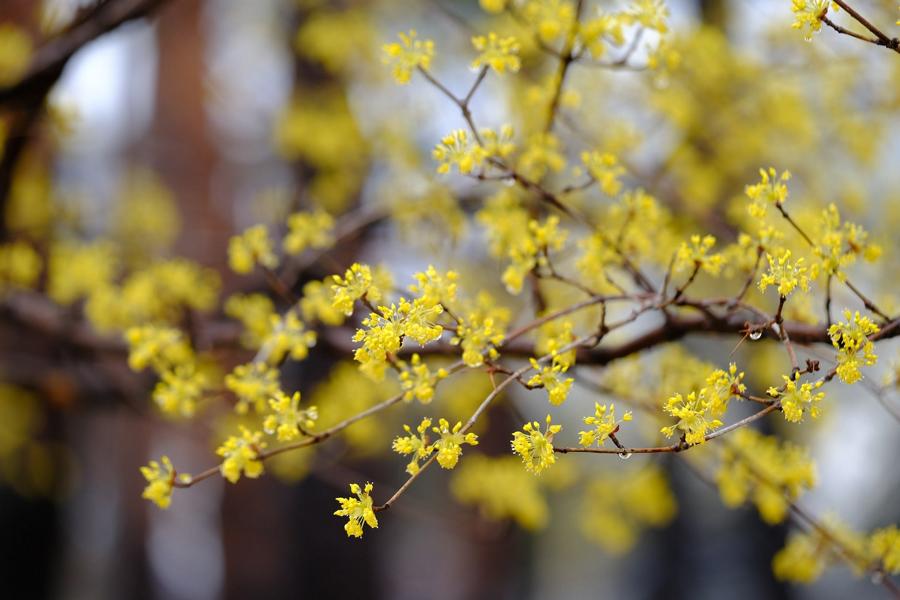
1. Cornelcer (Cornus Mass)
The dogwood is a real highlight for everyone who wants to do something good for insects in their garden at the beginning of the year. It opens its bright yellow flowers as early as February, making it an early source of food for bees.
This robust wild shrub impresses not only with its flowering, but also with its edible, slightly tart fruits in late summer. It also has beautiful autumn colors and fits perfectly into natural gardens or wild fruit hedges. It grows up to 5m tall and offers ample but good protection for privacy, both as a solitary plant and as a hedge. We think carnelian is a real expert’s gem and should be found in many more gardens.
Location and care: It prefers sunny or semi-shaded positions with soil rich in humus, preferably calcareous. It is hardy, tolerates cutting, tolerates drought and is generally easy to care for.
Ideal for: Natural garden, wild orchard, flowering hedge
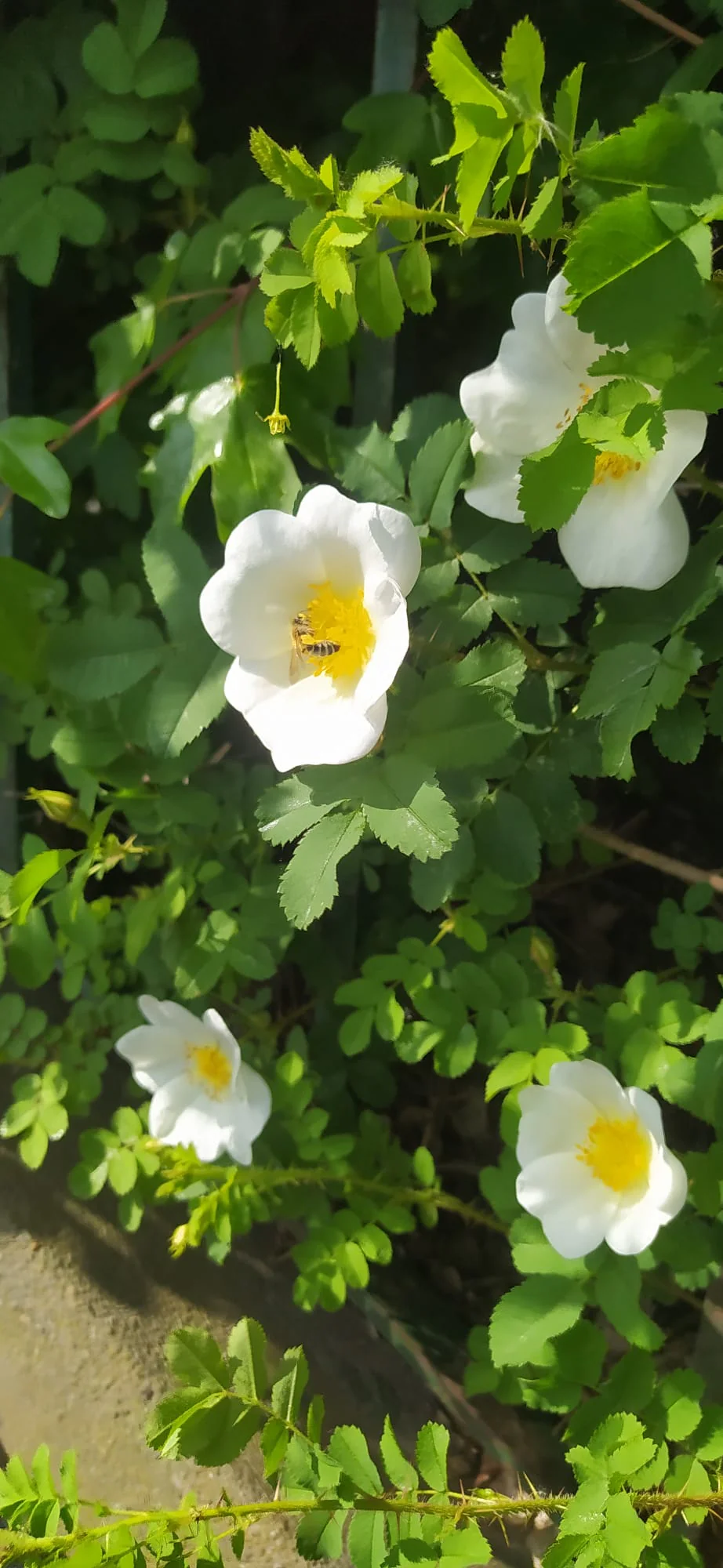
2. Wildrosen (e.g. B. Rosa canina, Rosa rubiginosa)
Wild roses are an absolute classic among bee-friendly shrubs! Their unfilled flowers are easily accessible to bees and wild bees, unlike heavily cultivated varieties.
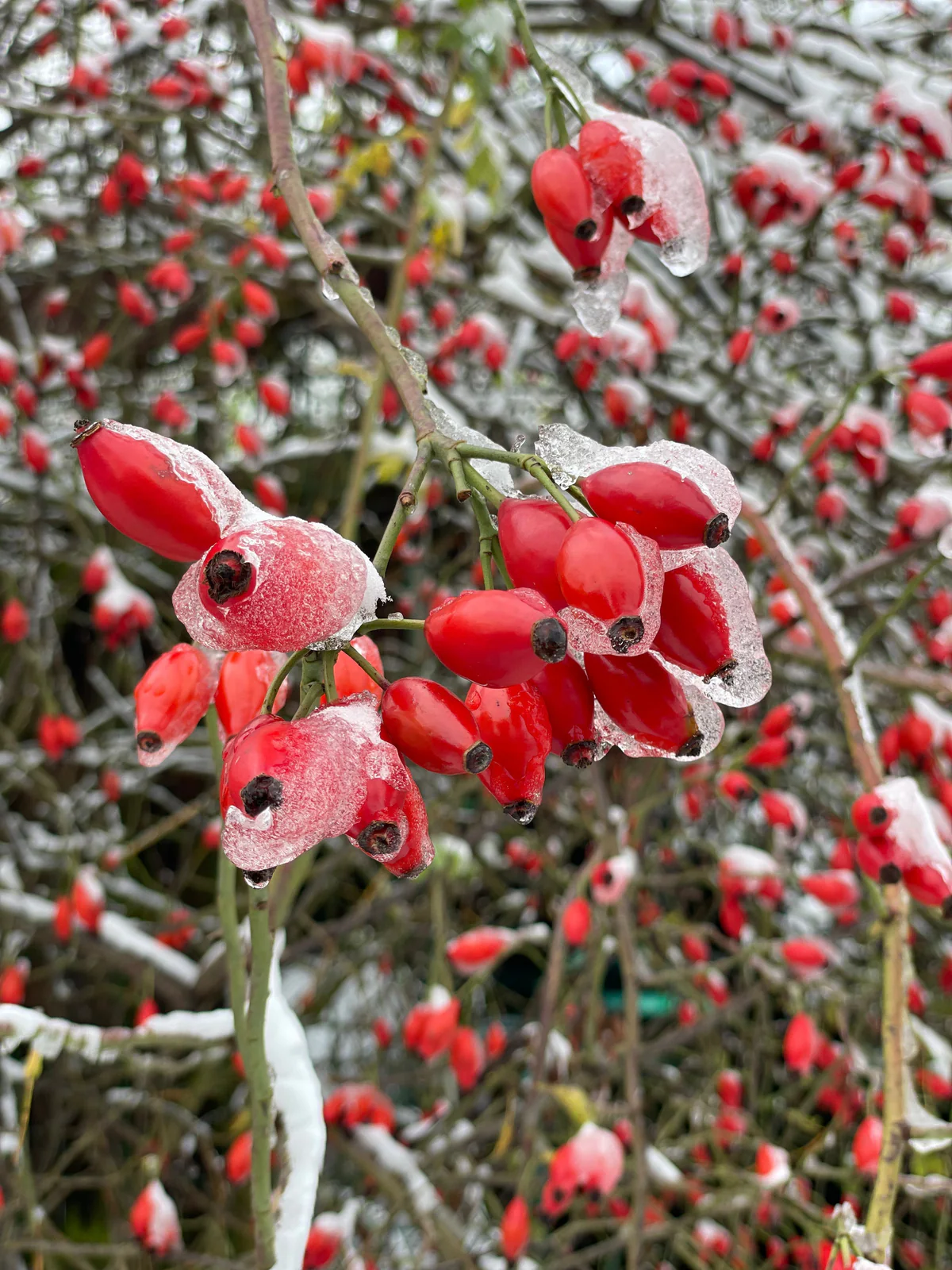
In late summer they also develop decorative rose hips, which not only look beautiful but also serve as a food source for many birds. Wild roses are suitable for both free-growing hedges and solitary flowering plants.
Location and care: Sunny locations, permeable soil, little maintenance required. Regular pruning promotes flowering.
Ideal for: Natural garden, hedge for bird protection, garden on a farm or in the countryside
(Rosa Bibernell)
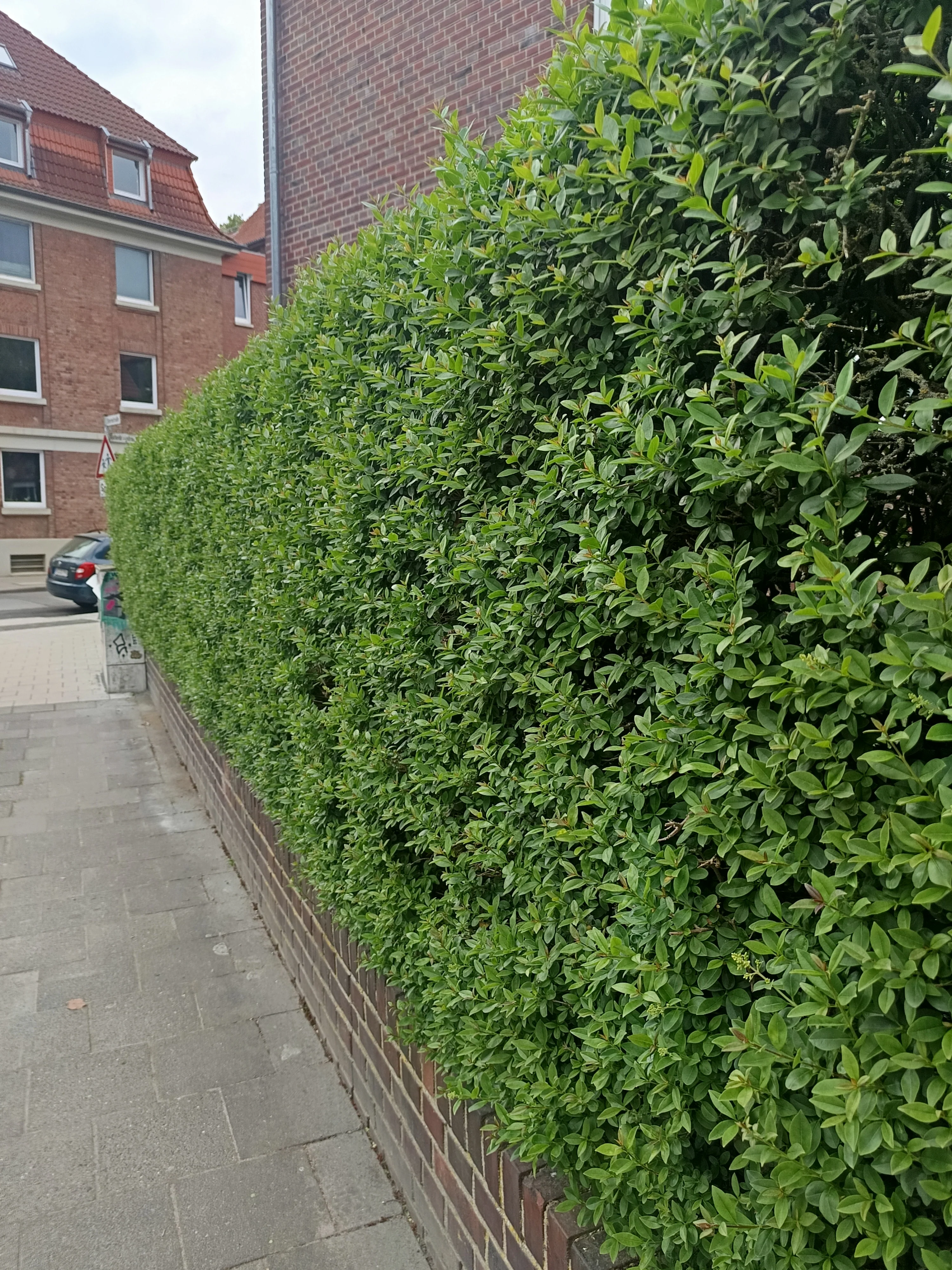
3. Privet (Ligustrum vulgare)
Inconspicuous but ecologically valuable: the native privet is often appreciated as a robust hedge plant, but its flowers in June should not be underestimated either. They give off an intense scent and attract numerous insects.
The black berries develop later in the year and are an important food source for many bird species. Privet is an excellent choice, especially in structured gardens. Due to its pruning tolerance, the privet is also very suitable as a privacy hedge, both in the (small) garden and in the front garden, which not only protects from prying eyes, but hums and lives.
Location and care: Not very demanding, it grows in sun and partial shade. Very easy to cut and durable.
Ideal for: Formal gardens, privacy hedges, natural borders.
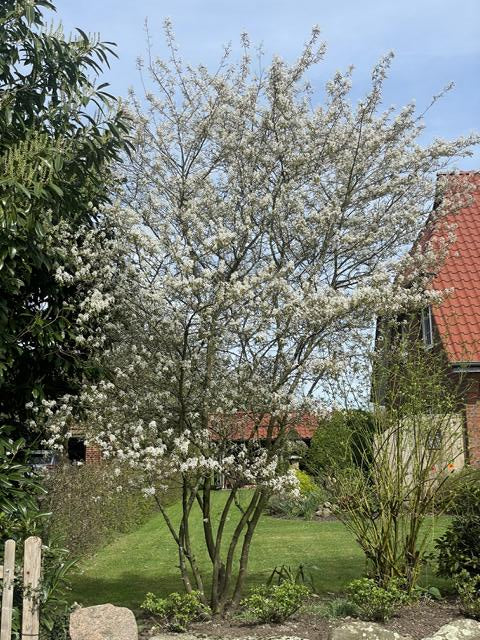
4. Copper rock pear (Amelanchier lamarckii)
This beautiful and versatile plant is a real all-rounder: Its delicate white flowers are extremely popular with bees in April. In summer they follow edible, sweet and aromatic fruits and in autumn they impress with the spectacular color of their leaves.
The copper wild pear is suitable both as an attractive solitary plant and in mixed hedges. Their loose, upright growth makes them particularly popular in modern, natural gardens. It is extremely versatile, be sure to check out our article on the copper wild pear as an all-rounder for the garden!
Location and care: Sunny to partially shaded, well-drained soil, very easy to care for.
Ideal for: Family gardens, modern garden design, wild fruit hedge
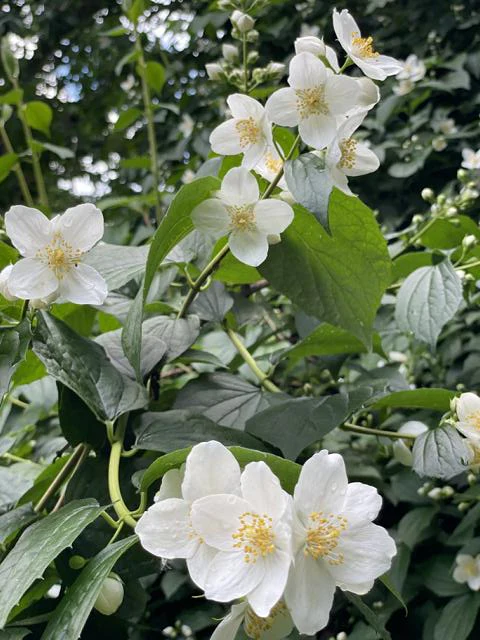
5. Farm jasmine/pipe bush (Philadelphus coronarius)
A seductive scent fills the garden when the farmer’s jasmine blooms. Its white flowers appear in abundance in the months of May and June and offer a particularly welcome landing and feeding place for wild bees!
In addition to the scent, it also impresses with its fast growth and its suitability as a privacy screen or as a background plant. Unfilled varieties are more insect-friendly than heavily filled ones.
Location and care: It loves sunny or partially shaded positions and nutrient-rich soil. Possibility of pruning after flowering.
Ideal for: Fragrant gardens, romantic gardens, flowering hedges
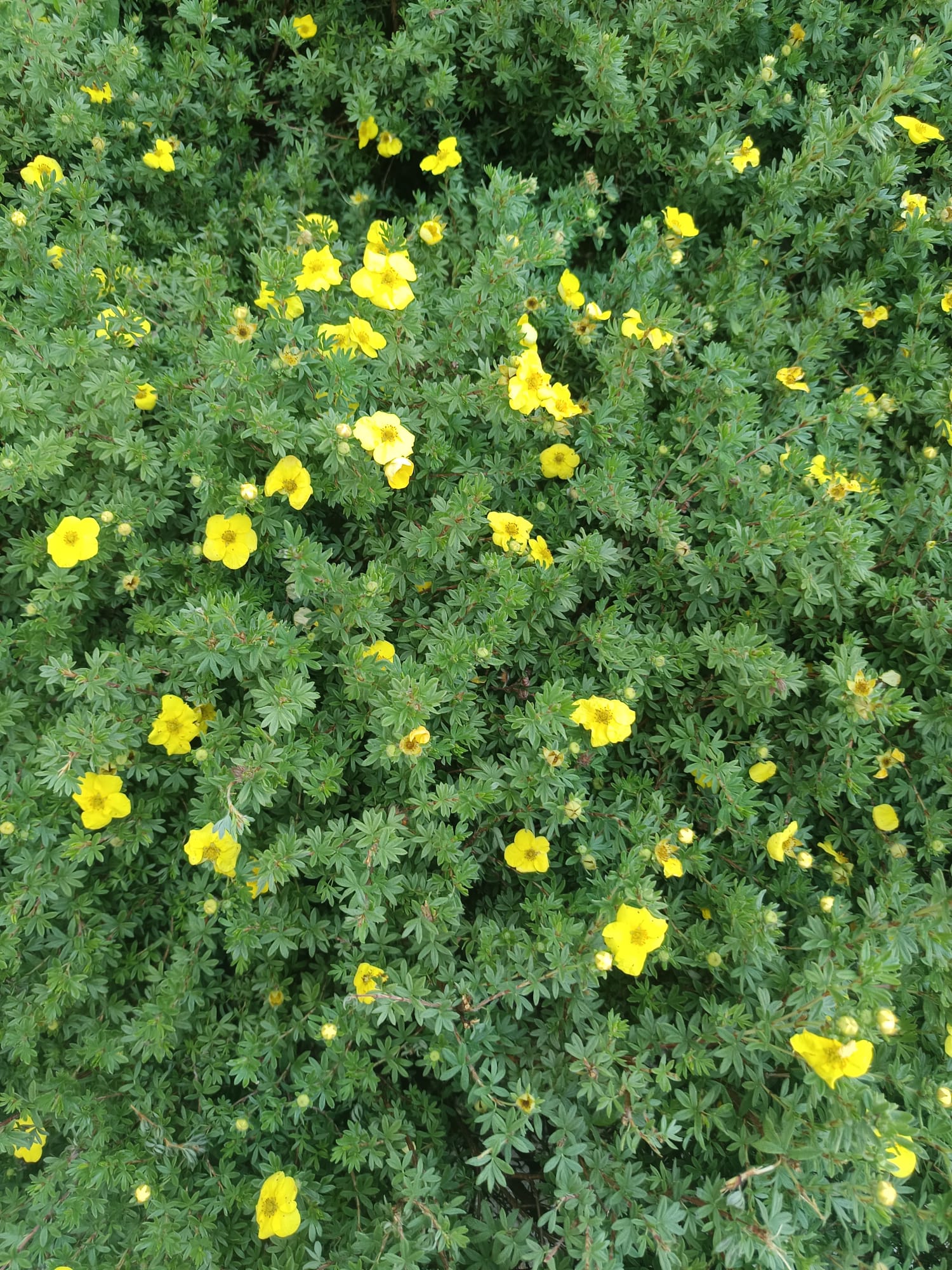
6. Fingerstrauch (Potentilla fruticosa)
The finger bush (white or yellow) is one of the easiest shrubs to care for and with a very long flowering period. From June to October it provides continuous food to bees, especially in sunny places.
It also looks quite impressive with its yellow or white flowers. Its compact growth makes it ideal for small gardens or as a border plant. Even if it counts as a shrub, thanks to its reduced height (approx. 60 cm maximum) it can also be planted as a ground cover, in pre-planting, as a border or even as a balcony plant.
Location and care: Tolerates drought, loves sun, tolerates cutting. Also suitable for difficult places.
Ideal for: Rock garden, front garden, bed border, balcony.
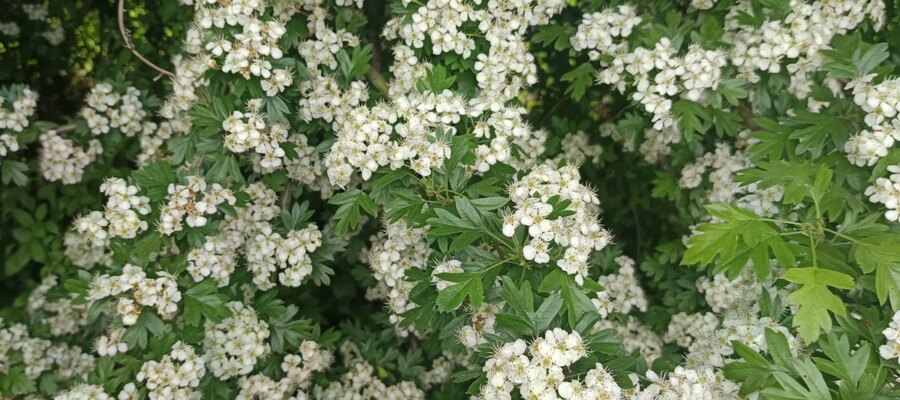
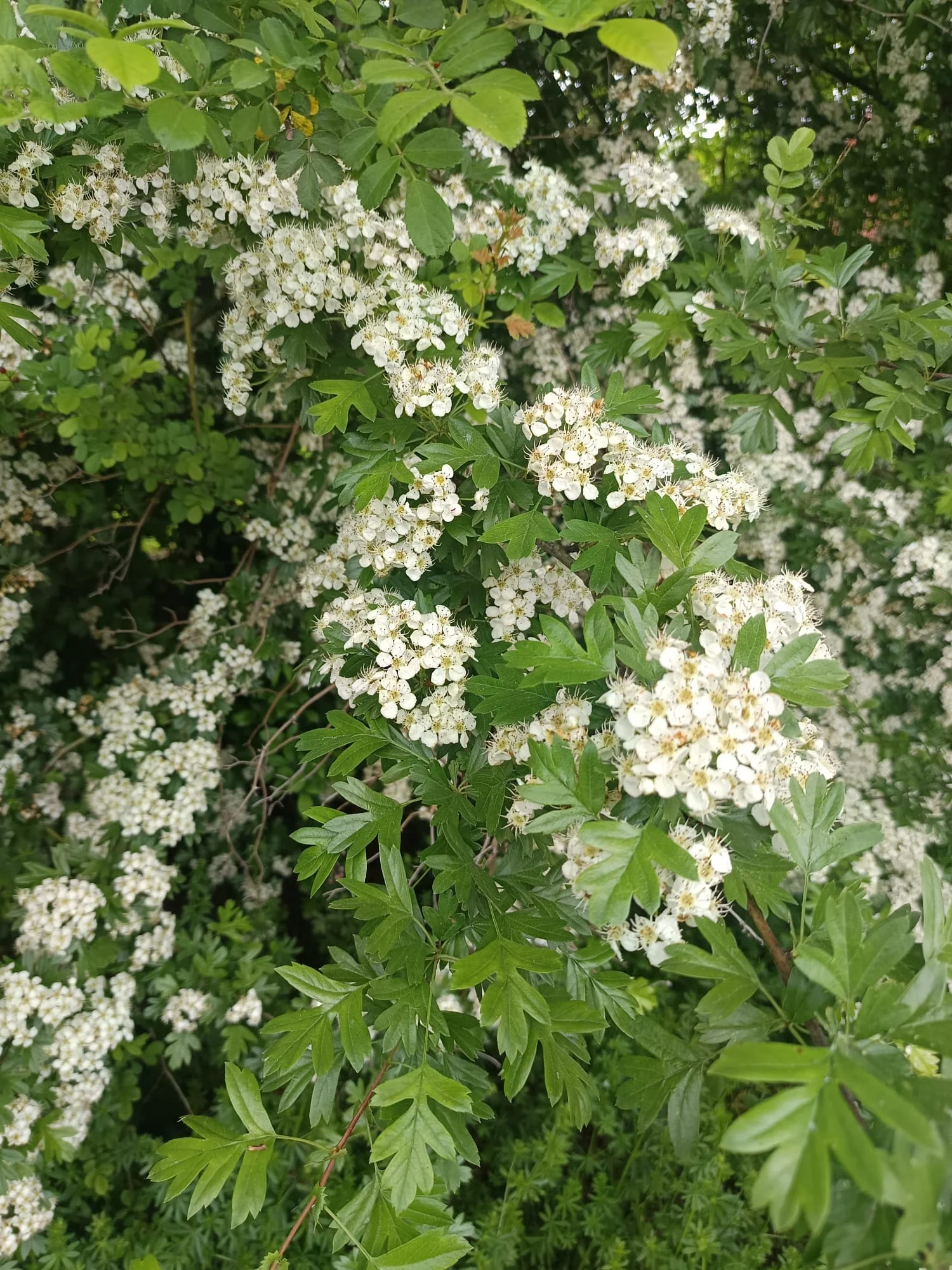
7. Weißdorn (Crataegus monogyna)
The hawthorn is a native shrub with high ecological value! Its dense inflorescences in May are a feast for bees, bumblebees and butterflies, while in autumn they follow red fruits for birds. It is also considered a medicinal plant.
Hawthorn grows as a densely branched, often thorny shrub or small tree and is ideal as a protective and nourishing tree.
Location and care: Not very demanding, even on poor soil, very robust.
Ideal for: Natural garden, bird protection hedge, field hedge
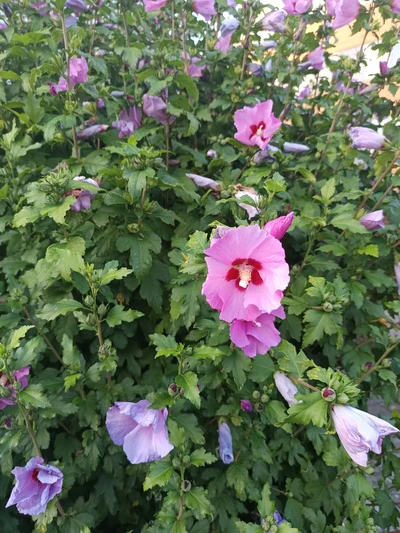
8. Hibiscus (Syrian hibiscus)
With its suggestive funnel-shaped flowers, the garden hibiscus adds color and exoticism to the garden, especially between July and September. It is a valuable food source for bumblebees and bees with long proboscis.
To ensure good compatibility with bees, it is recommended to choose varieties with unfilled flowers as they do not block access to nectar, e.g. Hibiscus Woodbridge. It can be easily shaped and is perfect as an eye-catching solitaire in small gardens. Exotic flowers create a strong visual highlight in a relatively small space.
Location and care: Warm and sunny, it loves well-drained and nutrient-rich soil. Cut back in spring.
Ideal for: Flower garden, secluded location, Mediterranean garden
9. Rosen-Deutzie (Deutzia 'Mont Rose')
The Deutzia rose enchants with delicate pink spike flowers that give a romantic look in May and June. Their empty flowers are easily accessible and therefore popular with insects.
It grows compact and upright, is suitable for flower beds or as part of a mixed flower hedge and is pleasantly easy to care for. This delicate Deutzia grows compact and upright and looks great in small flower beds or front gardens.
Location and care: Sunny to partially shaded soil, rich in humus, easy to cut.
Ideal for: Front garden, flowering hedge, ornamental flowerbed
Bottom line: Bee-friendly shrubs are an asset to every garden
No matter whether your gardening is wildly romantic, formal or low-maintenance, there are bee-friendly shrubs to suit every style. They bring the garden to life, often flower for weeks and provide valuable food for bees and other insects. At the same time, they are also attractive shrubs for your garden!
If you want to know which plants are suitable for the conditions in your garden: we will be happy to advise you personally!
Other blog articles that may interest you:
latest posts published
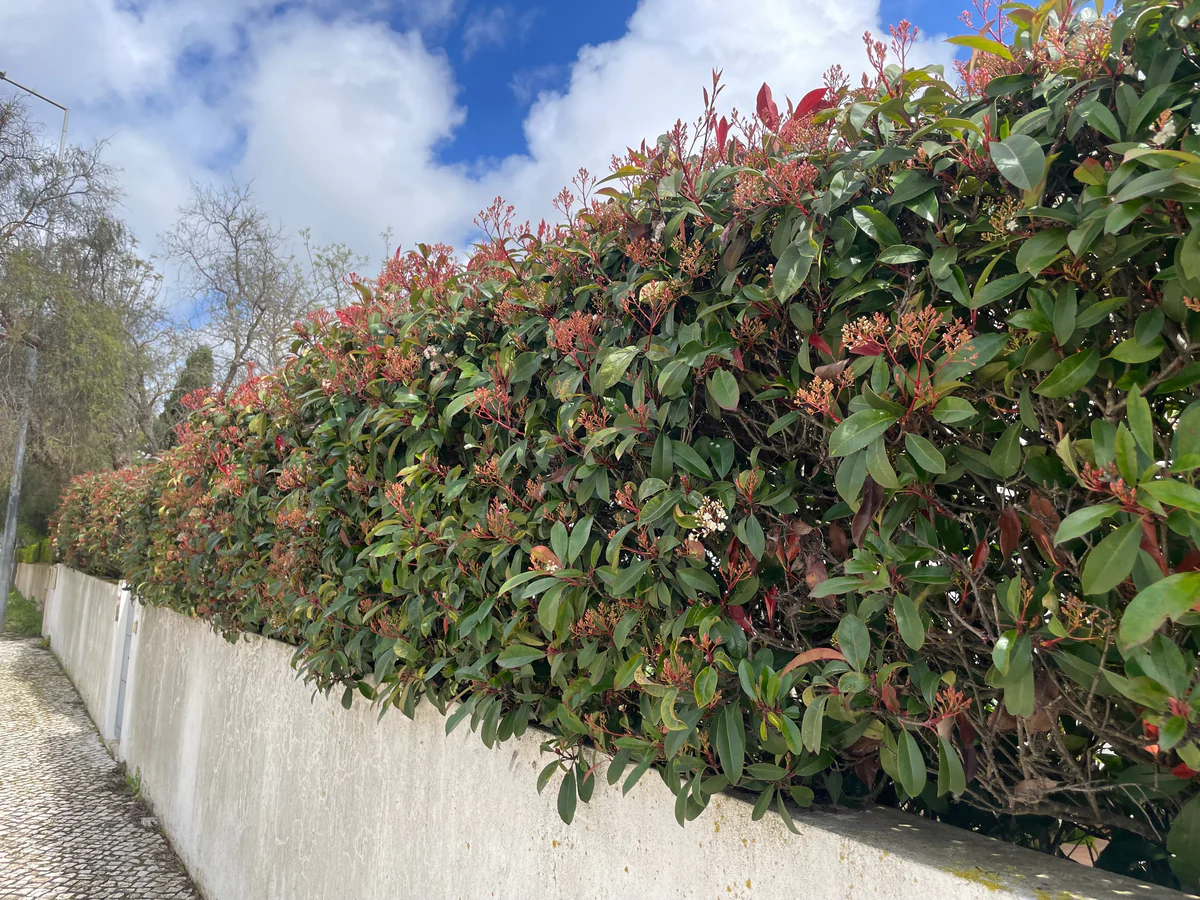
The best alternatives to cherry laurel and thuja: hedge plants for finches
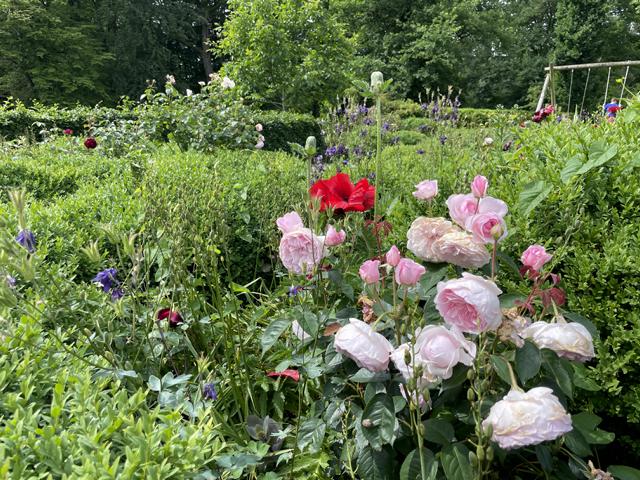
Heat in the Garden – How to Protect Your Plants from Drought Stress – finch
Evergreen plants in the garden: structure and color
Which one suits your garden? — Tree Finch

Redefine your bedroom with Bernhardt luxury beds
Use climbing roses as privacy screens and green facades in the garden – chaffinch
Best Home Remedies for Your Garden: Chaffinch

Caracole – Elegance, refinement and inspiring design
This is how olives, roses, etc. they survive the finch