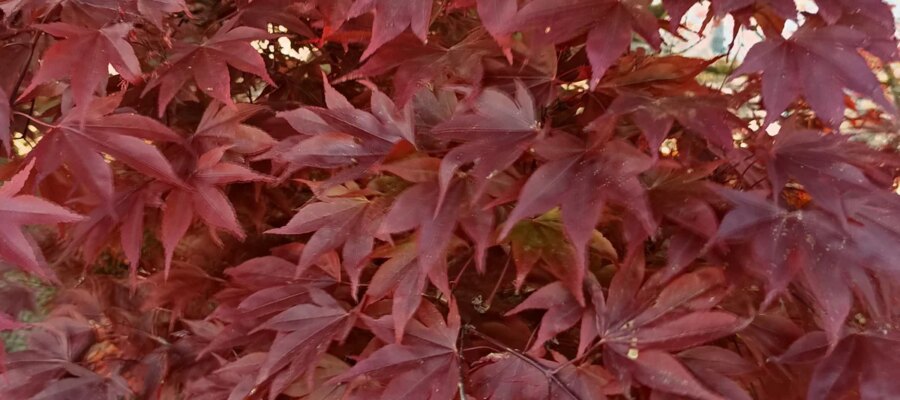
He is delicate, elegant and has a special charisma: that red Japanese maple (Acer palmatum Atropurpureum). With its fine foliage and intense coloring, it is a real ornament in the garden and brings that certain something to modern, Asian-inspired or natural designs. It is often planted as a solitary tree, especially in the front garden, because it works alone without too much accompaniment and attracts attention without requiring too much work.
In this article we will introduce you to the Japanese red maple in detail – with tips for planting, care and suitable combination ideas:
1. This is what makes Japanese Red Maple so special
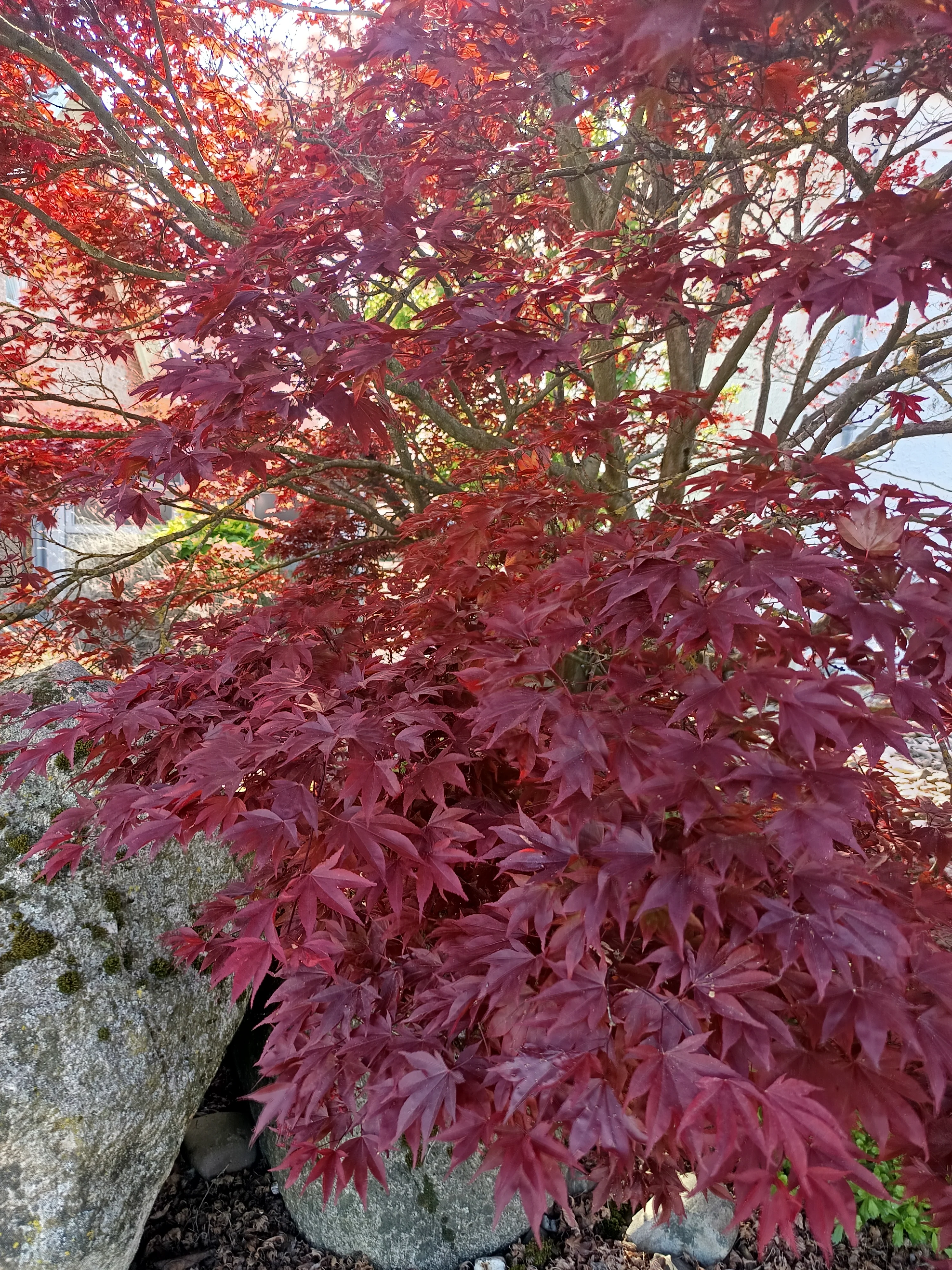
The Japanese red maple is one of the most popular ornamental trees in gardens, and for good reason. Its elegant habit, filigree foliage and, above all, the impressive red to purple color make it a real eye-catcher. It really shows its color effect, especially in spring and autumn.
It grows relatively slowly and remains quite compact. With a final height of 2-4 meters and an equally wide canopy, it also fits well in smaller gardens or front gardens. Although it is a shrub, it often grows tree-like and umbrella-shaped. Furthermore, it is relatively easy to cut.
2. Location and planting: This is what the Japanese maple needs
The location:
The Japanese maple grows naturally in light partial shade as an understory in Asian forests. Japanese maples like a protected, partially shaded to sunny location. Especially with young plants, full midday sun should be avoided: this can burn the thin leaves, so a full sun location on the south side of walls or walls is also not suitable. The ideal is a sunny place in the morning or evening and protected from the wind.
The right plan:
The soil should be humus, permeable and slightly acidic to neutral. The Japanese red maple does not tolerate water stagnation at all: in clayey soils it is therefore advisable to incorporate sand or grains of fine lava before planting. A little potting soil or compost also improves the soil structure.
Planting time and procedure:
The best time for planting is spring or early autumn. Dig a hole about twice as wide as the pot ball, loosen the soil well and, if necessary, mix in a little mature compost or horn shavings. Water well after planting and keep evenly moist for the first few weeks.
3. Easy to care for – with few rules
Overall, Japanese red maple is quite easy to care for if the location is right.
Deposit:
In longer periods of drought you should water regularly, especially with potted plants, but also if you plant the red Japanese maple in the bed. Because it is one Flachwürzler it needs it during longer dry periods Be sure to give additional water. But be careful to avoid water stagnation. It is best to water in the morning so that the water can drain away easily
Tip: Mulch protects the root area from drying out and keeps the soil evenly moist.
Fertilize:
It is best to fertilize in the spring with a complete organic fertilizer or compost. However, too much fertilizer is more harmful in this case: too many nutrients lead to softer and less frost-resistant shoots.
Cut:
Pruning is usually not necessary. If you want to correct the shape, you can prune carefully in late winter or early spring, always sparingly and only with sharp, clean scissors. Japanese maple does not tolerate larger pruning measures well.
Winter protection:
In the garden the Japanese maple usually does not need any special winter protection unless it is very exposed. Winter protection is important in the pot: wrap the pot with fleece or jute and place it, if possible, on a protected wall.
4. Ideas for backyard and garden combinations
Internship as a loner:
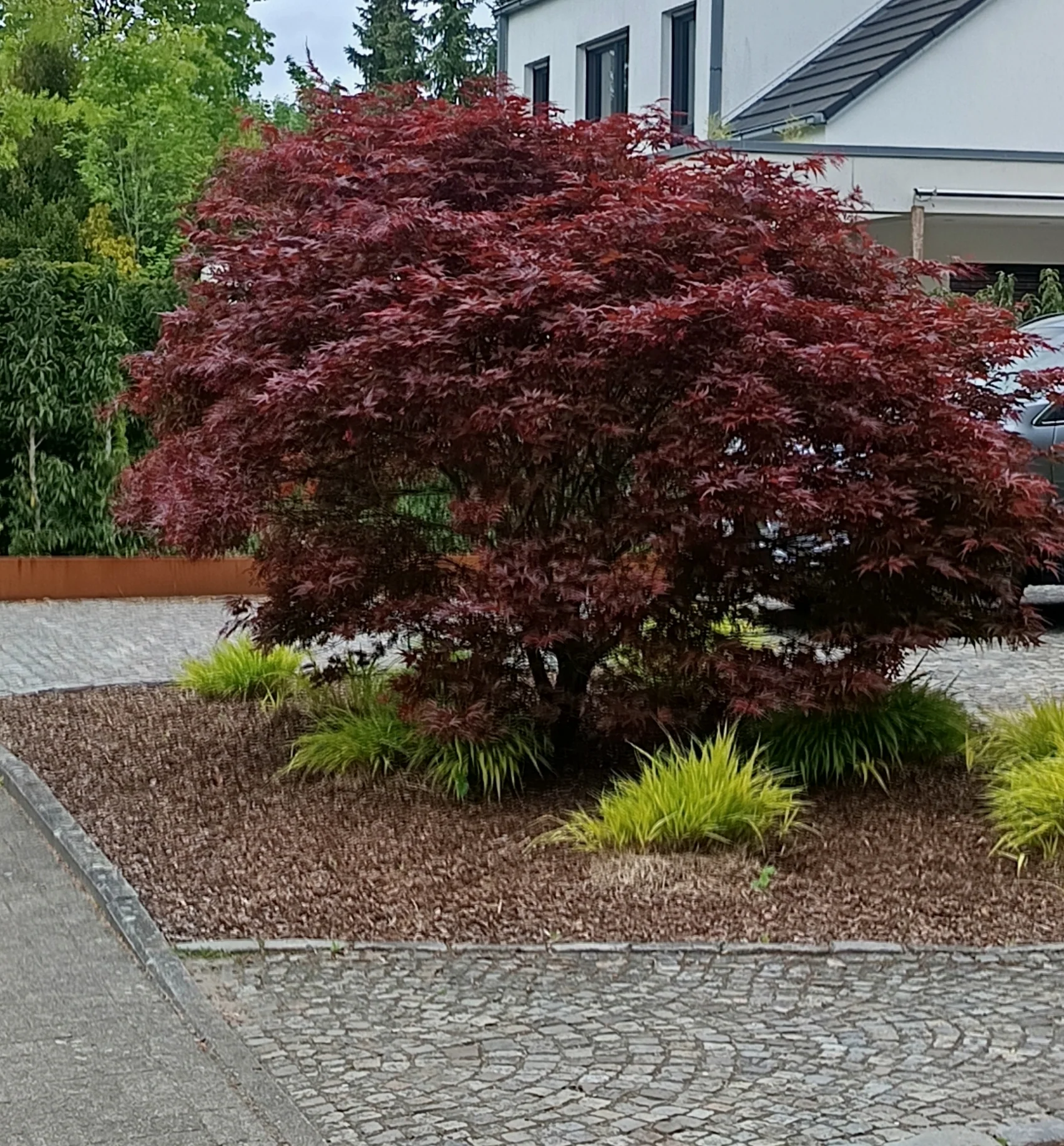
The red Japanese maple is most beautiful when it has space, for example as a central decorative element in the front garden or in the Japanese/Asian garden. A light gravel surface or mulch underlines the elegant effect.
Combination ideas:
- Bärenfellgras (Festuca glauca or gautieri): Very low, spherical and easy to maintain, ideal as a border plant.
- Vinca minor in white: A nice contrast to the red foliage, especially in partially shaded locations.
- Japanese azaleas or rhododendrons: Very effective in combination with Japanese maple, especially in partial shade.
- Ferns or Funky: Ideal for shady locations, they provide a natural and peaceful environment.
5. Suits many garden styles
- Modern garden: Clear lines, lots of surface, few colours: this is where Japanese maple comes into play.
- Asian Garden: Its origins make it a classic in Far Eastern-inspired gardens: combined with bamboo, boulders or water basins, it creates a harmonious atmosphere.
- Natural garden: It also provides structure to naturally designed gardens, especially beautiful when combined with grasses, ferns or free-growing trees such as elderberries.
- Front yard: As a unique specimen shrub, it brings elegance and color, without overloading the space. Particularly popular in combination with yew hedges or light-coloured paving stones.
Conclusion
You see: Red Japanese Maple is a true design element that adds character and structure to your garden or yard. With the right planting in the right place it needs almost no care and is therefore suitable for everyone who is looking for an attractive highlight. It is particularly ideal for an easy-care front garden with little sun, but fits very well into different garden concepts.
If you need inspiration or support with your selection, take a look at our red Japanese maple in the shop – or contact us directly. We will be happy to advise you.
Happy gardening!
latest posts published
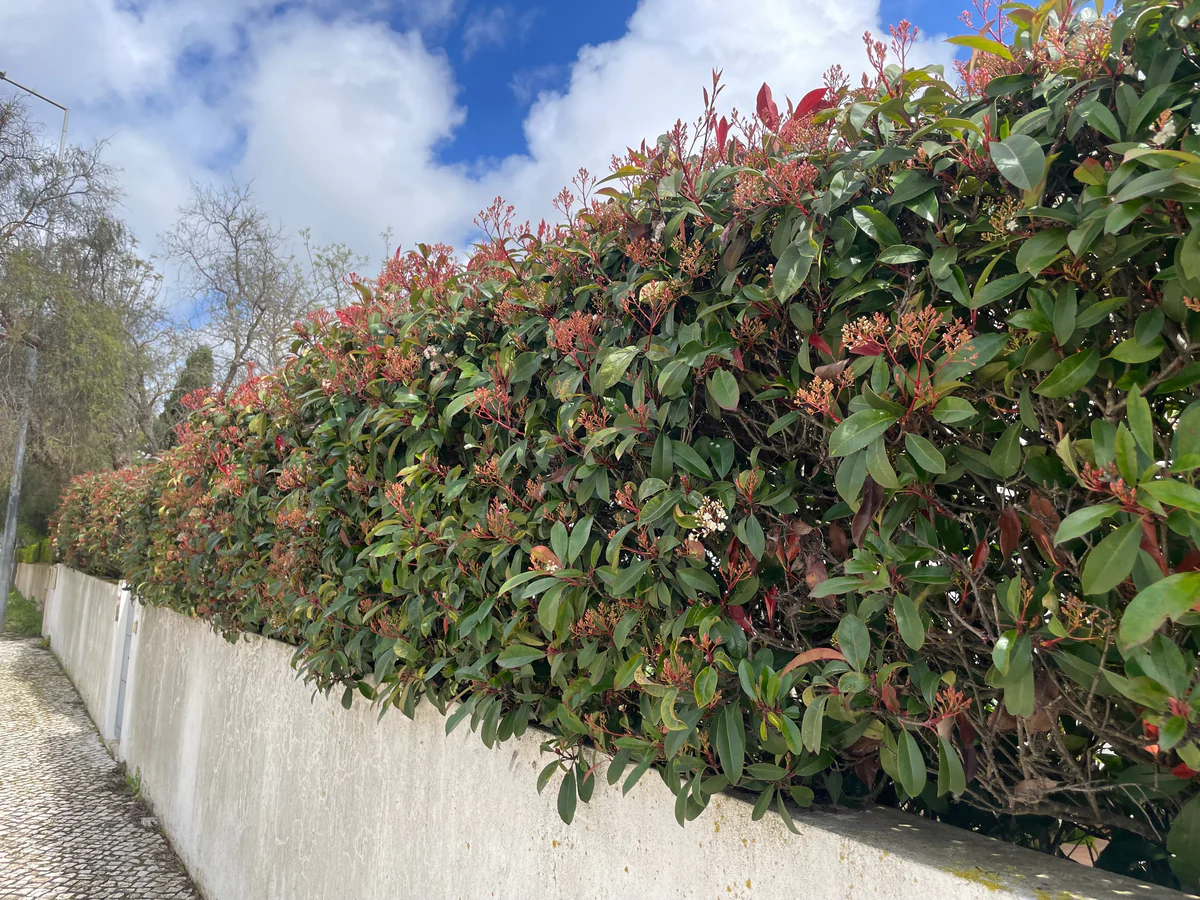
The best alternatives to cherry laurel and thuja: hedge plants for finches
Heat in the Garden – How to Protect Your Plants from Drought Stress – finch
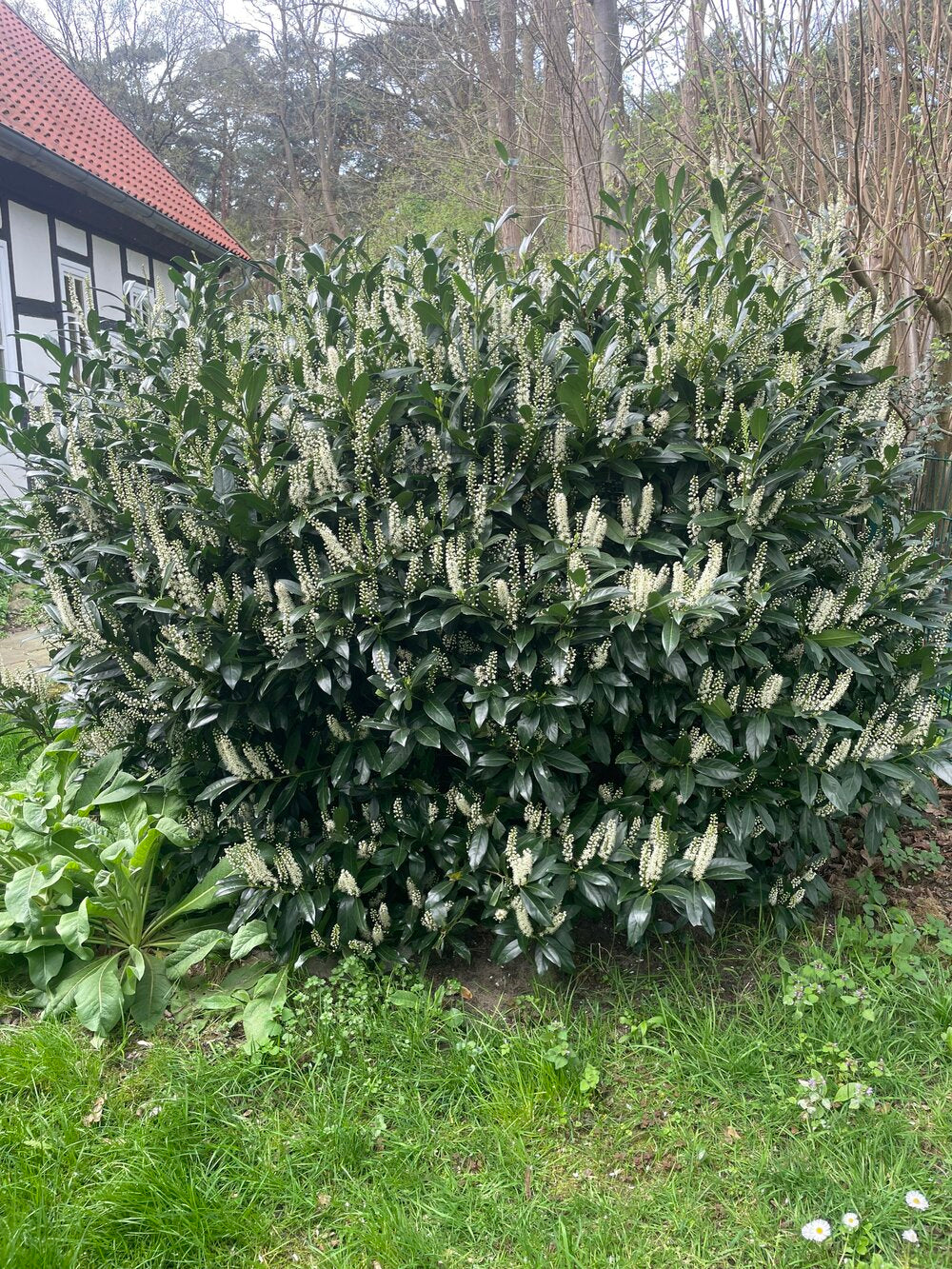
Evergreen plants in the garden: structure and color
Which one suits your garden? — Tree Finch
Redefine your bedroom with Bernhardt luxury beds
Use climbing roses as privacy screens and green facades in the garden – chaffinch
Best Home Remedies for Your Garden: Chaffinch
Caracole – Elegance, refinement and inspiring design
This is how olives, roses, etc. they survive the finch