Everyone knows apples, pears, raspberries etc. But have you ever thought about it? Bringing wild fruits or edible ornamental shrubs to your garden? These shrubs are not only hardy and easy to care for, but they also produce delicious fruit, often too
with further added value for insects and birds. Many of them can be easily integrated into natural or modern gardens, some even in pots on the balcony or terrace. In this article we will present you 7 recommended shrubs that are ecologically valuable and at the same time give your garden something very special.
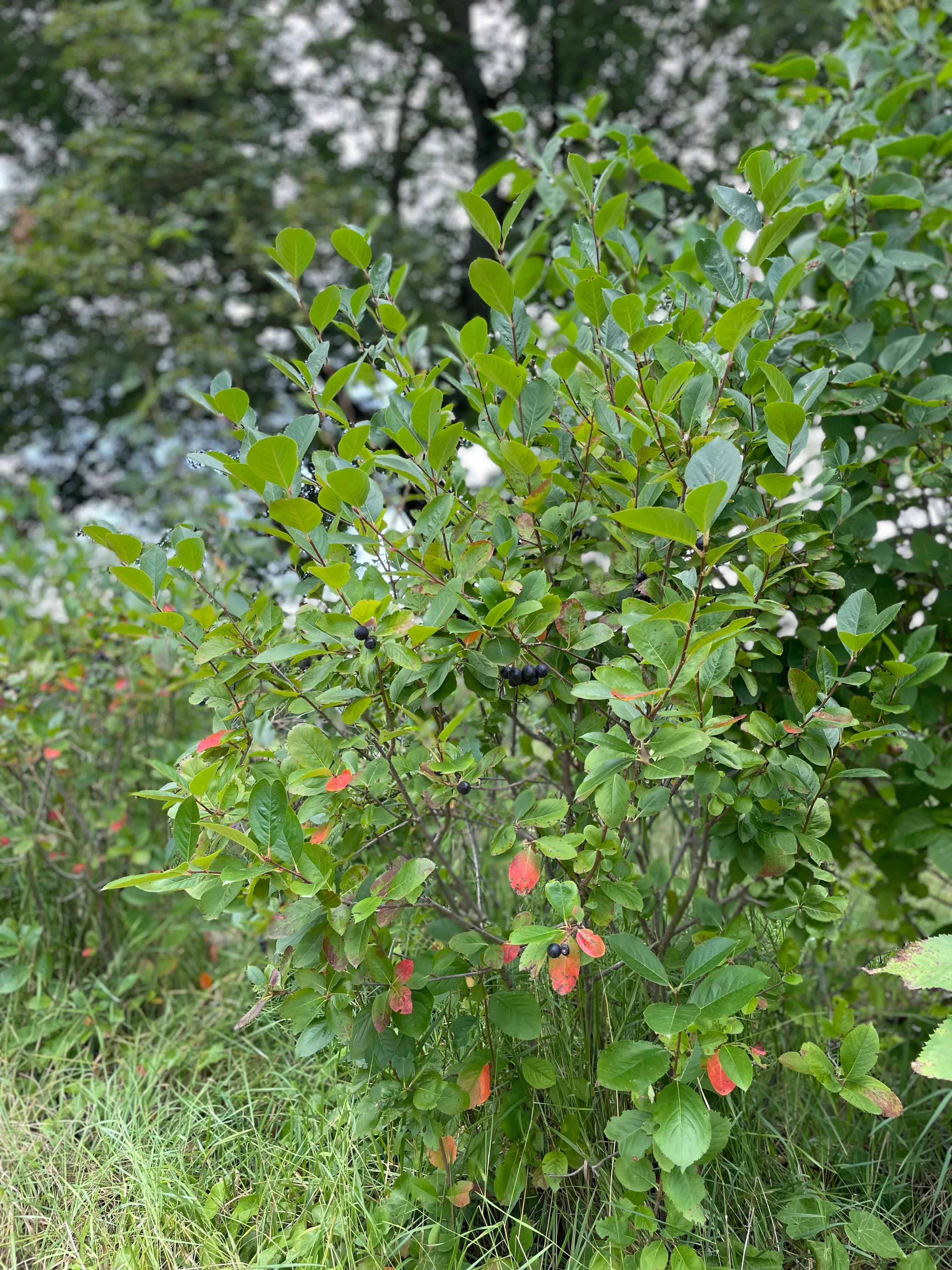
1. Aronia: superfood with a berry character
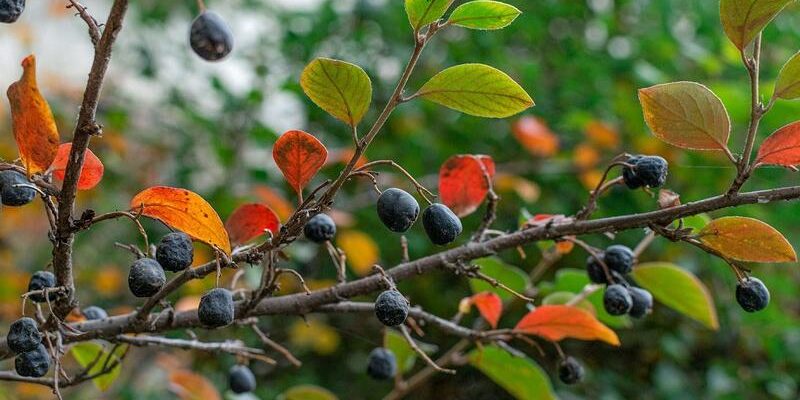
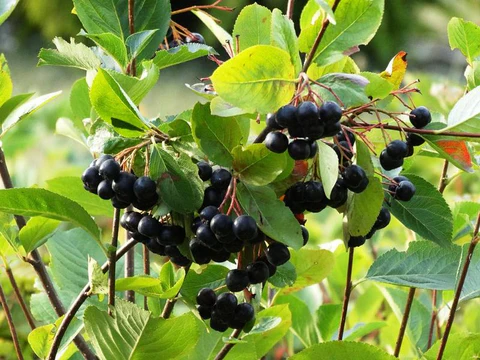
Aronia is a versatile shrub, resistant to pruning and with high yields. Its dark purple berries contain many antioxidants, have a slightly tart flavor, are considered a superfood and are ideal for making into juices, jellies or adding to granola. By the way: The white flowers in spring and the bright autumn colors also make them a visual highlight in the garden.
Measure: 1-2 m∣ Harvest time: September – October
Ideal for: Natural garden, modern planting solutions, pots on the balcony/terrace
Special Features: Autumn color, hardy, tolerates cutting, easy to care for
2. Copper Rock Pear: Versatile beauty
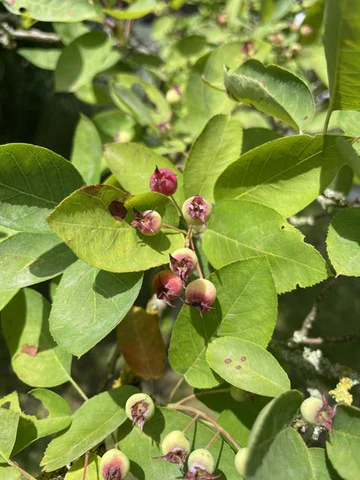
The wild copper pear is one of the most popular wild fruit trees. Their blueberry-like fruits are sweet and aromatic and are easy to snack on or make into jam. In spring it impresses with creamy white flowers and in autumn with spectacular foliage colour. It is also easy to care for and ecologically valuable, as it is an important tree for birds, bees and other insects!
Measure: 4-6 m (as shrub or small tree) ∣ Harvest time: June-July
Ideal for: Natural garden, front garden, small courtyards, city garden/modern gardens
Special Features: Attractive flowers, autumn colours, bird food, also suitable as a home tree
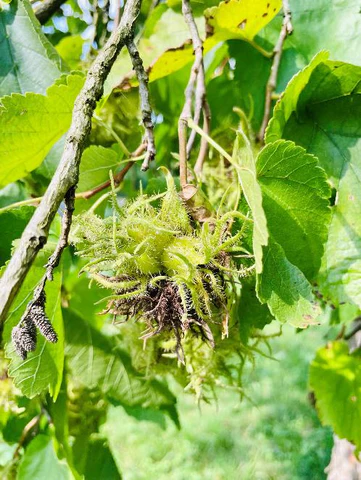
3. Hazelnut: high-yielding ornamental shrub
Hazelnut is not only a traditional fruit plant, but also a great source of structure in the garden. Your nuts can be eaten fresh, toasted or baked. The variety 'Webbs Preisnuss' produces particularly large fruits. Hazelnut bushes are robust and can be easily integrated into hedges. A second copy nearby significantly increases the yield.
Measure: 3-4 m∣ Harvest time: September-October
Ideal for: Family gardens, wild hedges, cottage gardens
Special Features: Nut supplier, easy to care for, drought resistant
4. Dogwood: the harbinger of spring for the garden
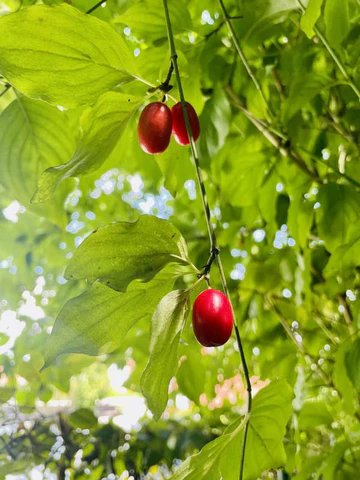
The dogwood is one of the flowers that blooms earlier in the year and is therefore particularly appreciated by bees, who find food there. Its small yellow flowers often appear in February/March. Subsequently, red, sweet and sour fruits ripen, which can be made into jelly or liqueur and are rich in vitamins C, B and E, as well as some minerals. It is very easy to care for, tolerates cutting and can also be used as a hedge. For us, carnelian is still a real gem!
Measure: 3-6 m∣ Harvest time: July-August
Ideal for: Wild fruit hedges, natural garden, sunny positions
Special Features: early insect willow, robust species, edible fruits
5. Haschberg Elderberry: Dual use of flowers and berries
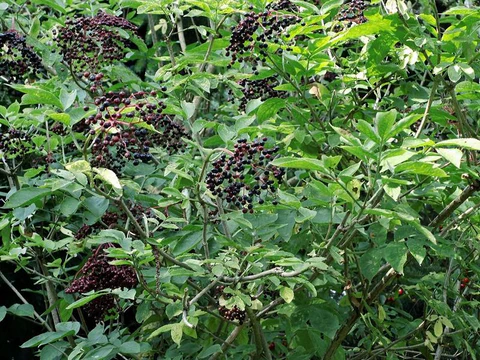
The black elderberry impresses with its large umbel flowers and dark berries. The flowers can be transformed into syrup, the berries into juice or jelly (they should not be eaten raw!). It is considered extremely drought tolerant, can tolerate a lot of sun and thrives even on less nutrient-rich soil. The Haschberg elderberry variety is characterized by particularly large and aromatic fruits!
Measure: 3-5 m∣ Harvest time: August-September
Ideal for: Wild corners, rural gardens, drought places
Special Features: Medicinal plant, ecologically valuable, plant for insects and birds
6. Sea Buckthorn: The attractive vitamin C hero for sunny places
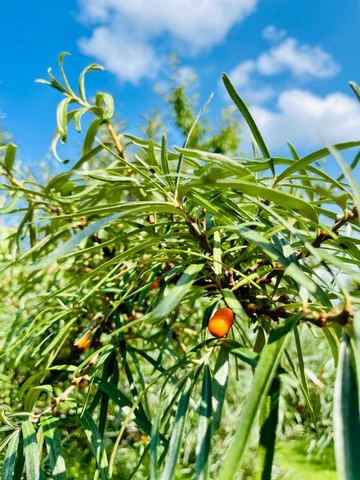
Sea buckthorn is an expressive silver-leaved shrub with bright orange fruits. It loves sun, resists drought and is extremely tolerant of salt. The fruits can be made into juice, puree or oil. Most varieties require both male and female plants – with us you can find them in the right pair, so one plant is enough.
Measure: 2-4 m∣ Harvest time: September-October
Ideal for: Wild fruit hedges, sunny slopes, modern minimalist gardens
Special Features: drought resistant, bird friendly, decorative
7. Blackthorn (Prunus spinosa): wild classic
The blackthorn is a true ecological talent: early flowering, insect food and fruit provider all in one. The blue fruits are tart and are traditionally processed after the first frost, e.g. B. with liqueur or jelly. However, it forms strong climbers and requires a lot of space and, ideally, a root barrier.
Measure: bus 4 m ∣ Harvest time: October-November (after frost)
Ideal for: large natural gardens, extensive hedges, biodiversity projects
Special Features: robust, very friendly to insects, not suitable for small gardens
Extra tip: ornamental quince (Chaenomeles japonica)
Strictly speaking it is not a wild fruit, but it is still worth mentioning: The ornamental quince impresses with its eye-catching flowers in spring and produces small, hard, but very vitamin-rich fruits in autumn. These are great for jelly or liqueur. It looks especially beautiful in small gardens or as part of low hedges.
Measure: That. 1 m∣ Harvest time: September-October
Ideal for: Ornamental gardens, small areas, front gardens, containers
Special Features: very decorative, easy to care for, easy to cut

So, in addition to apples and pears, you have now become acquainted with a whole host of edible shrubs that also produce an excellent harvest with their fruit! By the way, there are also hedge plants with edible fruit if you want your hedge to produce an additional yield. 🙂 Sturdy, easy to care for and attractive – we think wild fruits are a very useful choice for the garden!
Which of the shrubs suits your garden? As an experienced nurseryman we will be happy to advise you in choosing the right plant for the design of your individual garden. Just contact us!
Happy gardening! 🙂
latest posts published
The best alternatives to cherry laurel and thuja: hedge plants for finches
Heat in the Garden – How to Protect Your Plants from Drought Stress – finch
Evergreen plants in the garden: structure and color
Which one suits your garden? — Tree Finch

Redefine your bedroom with Bernhardt luxury beds
Use climbing roses as privacy screens and green facades in the garden – chaffinch
Best Home Remedies for Your Garden: Chaffinch

Caracole – Elegance, refinement and inspiring design
This is how olives, roses, etc. they survive the finch